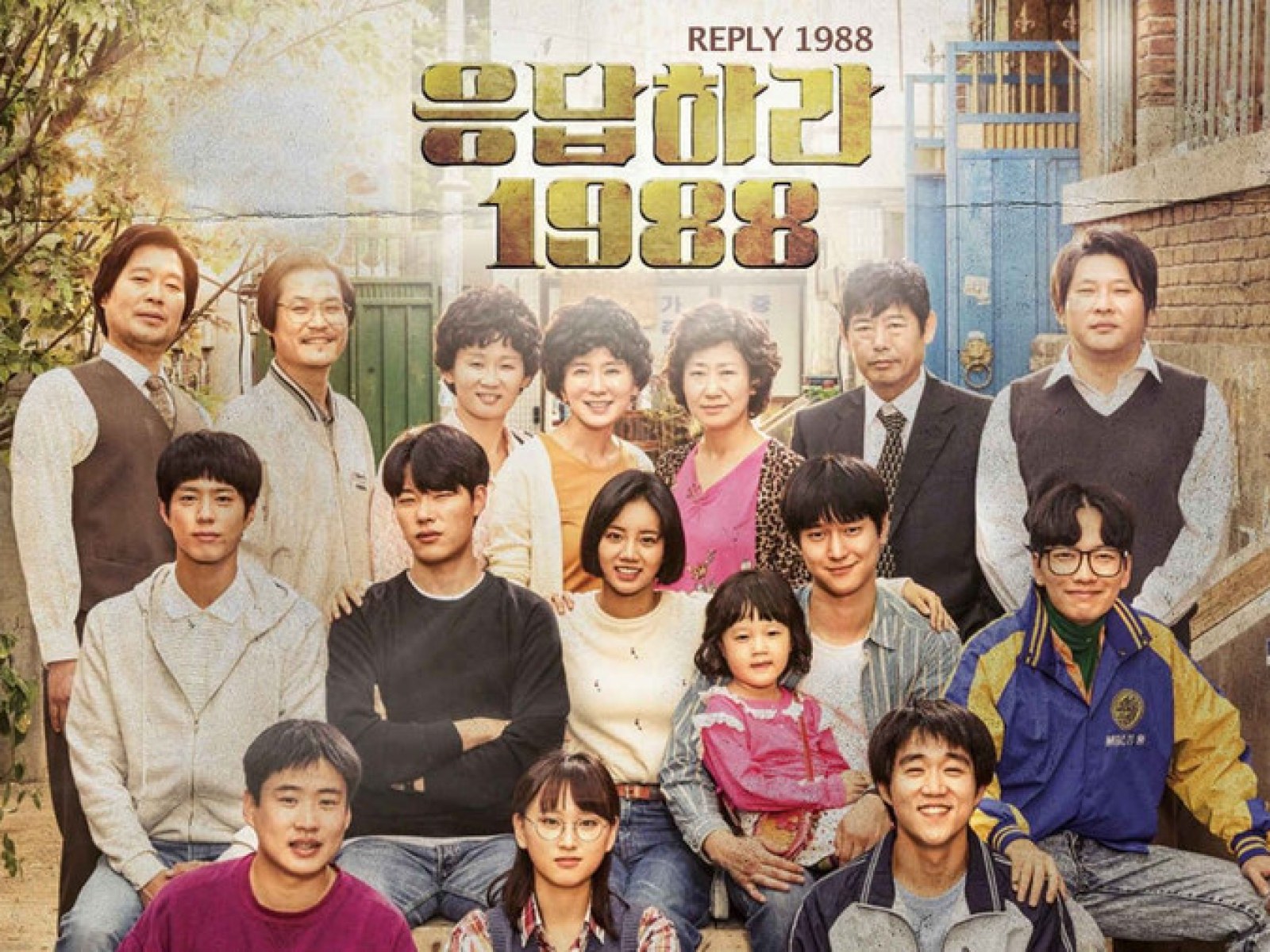
Nostalgia has a way of sneaking up on us — in the scent of old books, the crackle of a cassette tape, or the familiar chatter of friends who once knew every corner of our hearts. Reply 1988, one of tvN’s most beloved dramas, captures this magic with warmth and sincerity, inviting viewers to step back into the late 1980s — a simpler yet deeply emotional time.
Unlike the high-stakes thrillers and sweeping romances that often dominate the K-drama scene, Reply 1988 shines in its quietness. It is not about world-shaking events, but about the small, tender moments that shape who we become — the laughter echoing through narrow alleyways, the smell of home-cooked meals drifting between neighbors’ houses, and the gentle bonds between childhood friends who grow up side by side.

Praised by critics as “a masterclass in emotional storytelling” for its heartfelt portrayal of family, friendship, and the universal pang of growing up, Reply 1988 follows five friends and their families living in Ssangmun-dong, Seoul. Through their intertwined lives, the series offers a poignant reminder: that love is often found not in grand gestures, but in the quiet constancy of the people who stay.
Finding home in the backstreets: Growing up, side by side
Life rarely unfolds in grand fireworks; more often, it hums quietly in narrow alleyways, familiar front porches, and the laughter of friends who feel like family. Reply 1988, one of tvN’s most beloved dramas, captures this truth with tenderness and nostalgia — turning the everyday lives of five families in a small Ssangmun-dong neighborhood into something extraordinary.

Set in late-1980s Seoul, the series is a warm-hearted tapestry of friendship, first love, and family — and the invisible threads that tie them all together. While there’s no grand villain or high-stakes drama, its quiet power lies in the way it mirrors our own lives: messy, imperfect, and full of meaning only recognized in hindsight.
A neighborhood raising its children

The show’s heart beats through the five childhood friends — Deok-sun, Jung-hwan, Sun-woo, Dong-ryong, and Taek — and their intertwined families. They bicker, tease, and share meals as if living under one roof, blurring the line between neighbor and kin. It’s this blurred boundary that makes Ssangmun-dong feel like home not just to them, but to viewers too.
Each family bears its own struggles: financial burdens, parental expectations, unspoken grief — yet they face them not in isolation, but in quiet solidarity. A bowl of hot stew passed across the fence, a consoling pat on the back, a late-night snack shared in silence — these small gestures speak louder than words.
Parents, the silent heroes

Beneath the story’s youthful glow runs a deep reverence for parents — their quiet sacrifices, unnoticed pains, and unwavering love. Deok-sun’s father hides his tears when he can’t afford her school trip. Jung-hwan’s mom saves money to buy her son new shoes while wearing worn-out slippers herself. Sun-woo’s mother raises two children alone with dignity and grace, while the entire street quietly steps in to lift her burdens.
These portraits of parenthood remind us that love isn’t always loud. Often, it’s silent — present in every packed lunch, every long workday, every unspoken “I love you” tucked into the mundane.
Growing up is leaving and coming back

As the friends grow older, they drift apart — university, careers, and new cities pull them away. Yet their roots remain firmly in Ssangmun-dong, in the laughter and chaos of their youth. When they reunite as adults, it’s not just nostalgia that brings them back, but gratitude — for a childhood filled with people who loved them fiercely in quiet ways.
Reply 1988 is ultimately a love letter to the people who shape us: parents, neighbors, childhood friends — the ones who stand by us through awkward years and growing pains. It reminds us that while we may outgrow places, we never outgrow the love that once held us there.
Because growing up, as this series gently shows, isn’t about leaving home — it’s about realizing it never really left us.