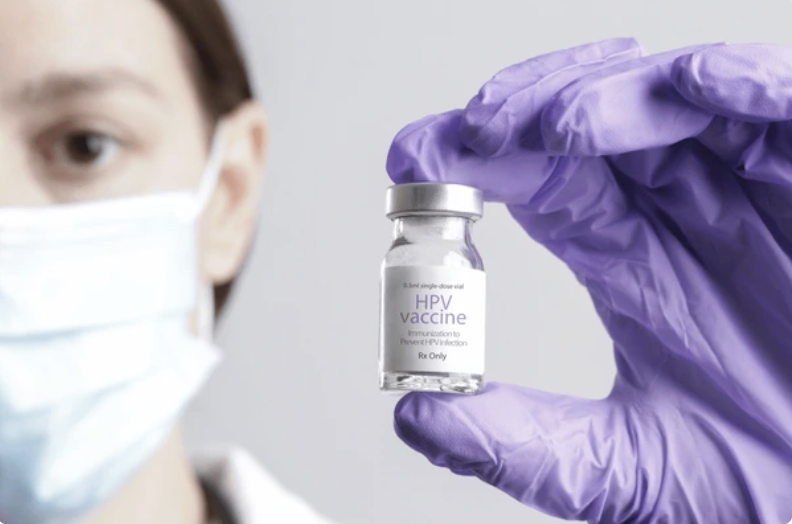
In the quiet but persistent battle against preventable diseases, hope often arrives not with fanfare, but in the form of small HPV vials that carry the power to save lives. For hundreds of Filipinos living with HIV, that hope now comes through a renewed commitment to protection and dignity.
Recently, MSD in the Philippines, in partnership with the PHAPCares Foundation and Project Red Ribbon, turned that hope into action through a donation of 1,500 doses of the human papillomavirus (HPV) vaccine.
The vaccines will help protect around 500 people living with HIV (PLHIV) from HPV-related cancers and diseases — each completing a three-dose regimen within a year.
HPV is one of the world’s most common infections and a known cause of cervical, anal, and other cancers. For PLHIV, the risks are particularly high: a weakened immune system makes it harder to fight off infections, leaving them more vulnerable to persistent HPV that may lead to cancer.

Representatives from MSD led by Andreas Riedel, President and Managing Director (3rd from left), together with PHAPCares Foundation, the Department of Health, and the Pasig City LGU join hands with Project Red Ribbon to mark the donation of HPV vaccines for people living with HIV (PLHIV)
“This donation is a humble contribution that will help protect the PLHIV community from HPV-related diseases, including cervical cancer and other HPV-related cancers,” said Andreas Riedel, President and Managing Director of MSD in the Philippines. “More importantly, we hope this effort calls attention to the urgent need for leaders across sectors to prioritize and address the health needs of people living with HIV, empowering them to live and thrive with dignity as productive members of society.”
HPV and HIV: A dangerous intersection

The Joint United Nations Programme on HIV and AIDS (UNAIDS) estimates that up to 220,000 Filipinos live with HIV today. Advances in testing, treatment, and advocacy have significantly reduced HIV-related deaths. However, new challenges are emerging.
According to the World Health Organization (WHO), women living with HIV are six times more likely to develop cervical cancer than women without HIV.
In the Philippines, an estimated 12 Filipinas die every day from cervical cancer—a number that remains tragically high despite the availability of vaccines and screening tools.
“The danger isn’t just the virus — it’s the gaps in access,” said Dr. Maria Rosarita Siasoco, Executive Director of PHAPCares Foundation. “For many PLHIV, preventive services like HPV vaccination or screening aren’t always within reach. At PHAPCares, we don’t see our work as charity. We see it as dignity in action — reaching out, giving hope, and touching lives.”
Bridging gaps through partnerships

Photo shows Andreas Riedel (seated, at left) of MSD in the Philippines together with Dr. Maria Rosarita Fiasco, Executive Director, PHAPCares Foundation; and Ico Johnson, President, Project Red Ribbon during the signing of a partnership agreement to provide HPV vaccines for people living with HIV (PLHIV). Serving as witnesses to the signing are (standing, from left:) Dr. Joan Carlota Ranieses, Partner Physician, Project Red Ribbon; Syo Joseph Mateo, HIV Surveillance Officer, Epidemiology Bureau, Department of Health; and Dr. Rocylene Roque, HIV Coordinator, Pasig City Health Office.
This initiative builds on MSD Philippines’ long-standing work with the Department of Health (DOH), Department of Education (DepEd), and civil society partners to expand access to HPV vaccination.
Over the past decade, school-based programs and awareness campaigns such as One Community Against HPV, S.H.I.E.L.D Against Cervical Cancer, and Tapusin Natin have sought to normalize vaccination and eliminate stigma.
The latest partnership aligns with the WHO’s 90-70-90 strategy to eliminate cervical cancer by 2030:
- 90% of girls fully vaccinated against HPV by age 15
- 70% of women screened by ages 35 and 45
- 90% of those diagnosed with the disease receiving treatment
“Private sector partnerships expand our capacity to deliver comprehensive services,” said Syo Joseph Mateo, HIV Surveillance Officer at the DOH Epidemiology Bureau. “The HPV vaccine allocation for PLHIV shows how collaboration strengthens the continuum of care and ensures health systems are more responsive to the needs of our communities.”
A community united by care

For organizations like Project Red Ribbon, which supports over 10,000 PLHIV and 200 children living with HIV across the country, the donation represents more than just doses — it’s a symbol of recognition and inclusion.
“On behalf of everyone we serve, maraming salamat for trusting us to bring vaccines to those who need them most,” said Ico Johnson, President of Project Red Ribbon. “Every vial we deliver brings hope that we can live healthier, longer lives.”

In the end, what binds these partners is a shared belief: that prevention is power, and that protecting one life can ripple across families and communities.
As Harvey Alvarez, Clinic Case Manager and Peer Support at My Hub Cares, put it, “In our community, reaching out can be difficult. That’s why we need programs like this — so we can protect ourselves and the younger generation.”
Through compassion, collaboration, and commitment, MSD, PHAPCares, and Project Red Ribbon remind us that health equity begins with inclusion — and that no one should be left behind in the fight against HPV and cervical cancer.