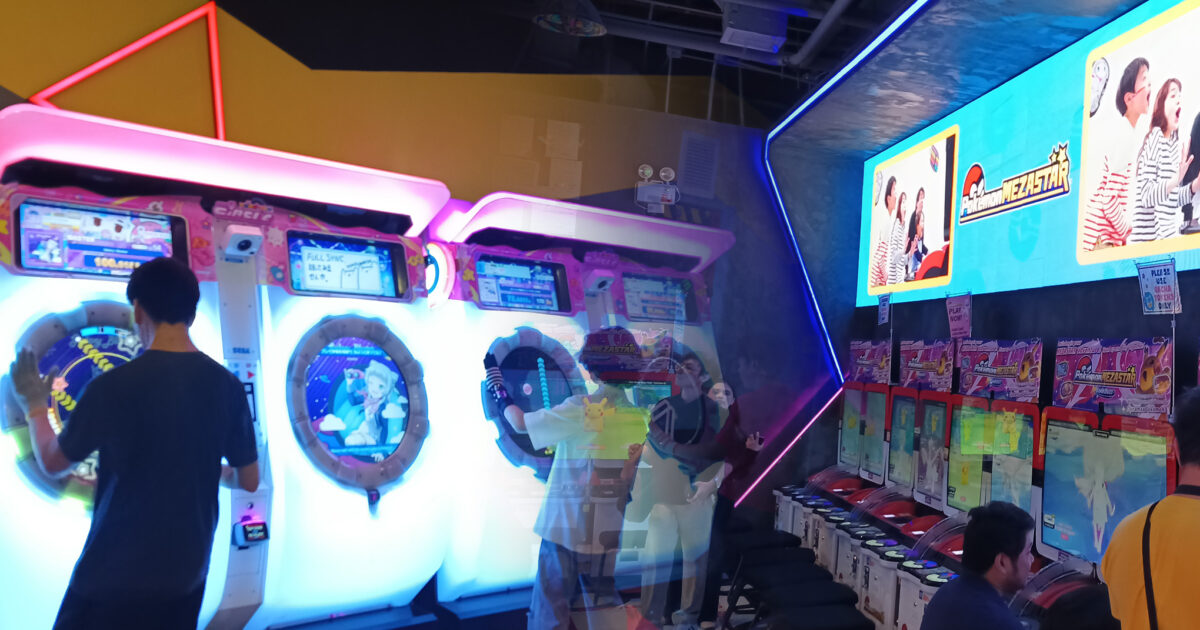
For many Filipinos, arcades remain a familiar refuge — a place to unwind after a long day, bond with family, or simply pass time with friends. Tucked inside malls across the country, these brightly lit spaces continue to draw crowds, especially on weekends, offering a mix of nostalgia and modern entertainment.
While not as deeply ingrained as in countries like Japan, arcade culture has long been part of the Filipino urban experience. In major shopping hubs, particularly across Metro Manila, it is still common to find multiple arcades operating side by side, catering to both casual visitors and niche gaming communities.
Although I was first exposed to them when I was around 10 or 11 years old, it wasn’t until my ninth grade that I began to visit arcades regularly. One game that really kickstarted my arcade journey was Konami’s jubeat, a rhythm game unique for its 4×4 cube-shaped control scheme.
Arcades, for me, encourage genuine social connections — and that’s what truly counts. If it weren’t for them, I wouldn’t be the person I am today.
From retro roots to modern chains
Believe it or not, before all of these Timezones and Quantums, there were local arcade chains that existed before the current age.
Long before today’s large-scale operators, older arcade names such as Fiesta Carnival, Glico’s, and Time Out shaped the early experiences of Filipino gamers. These venues introduced generations to classic titles like Street Fighter, Marvel vs. Capcom, and the Dance Dance Revolution, games that continue to spark nostalgia among older players while influencing younger audiences today.
Prominent arcade chains
Modern arcade culture, however, is largely defined by a handful of key players.
Today, we have popular arcades like Timezone, Quantum, Tom’s World and World of Fun. While there are other smaller chains like Dodolon World and Wonderpark, for this article I will be discussing briefly on the more prominent ones, especially in Metro Manila.
International chain Timezone has grown into one of the most visible operators in the country, offering not only traditional arcade games but also immersive experiences such as virtual reality attractions and recreational activities like bowling and karaoke.
Local operator Quantum Amusement, meanwhile, has carved out a strong following among rhythm game enthusiasts, hosting titles from Konami’s BEMANI series and other music-based games that attract dedicated communities.
Other players, including Tom’s World and World of Fun, continue to maintain a presence nationwide, offering a mix of classic and contemporary games that appeal to a broad audience.
Timezone
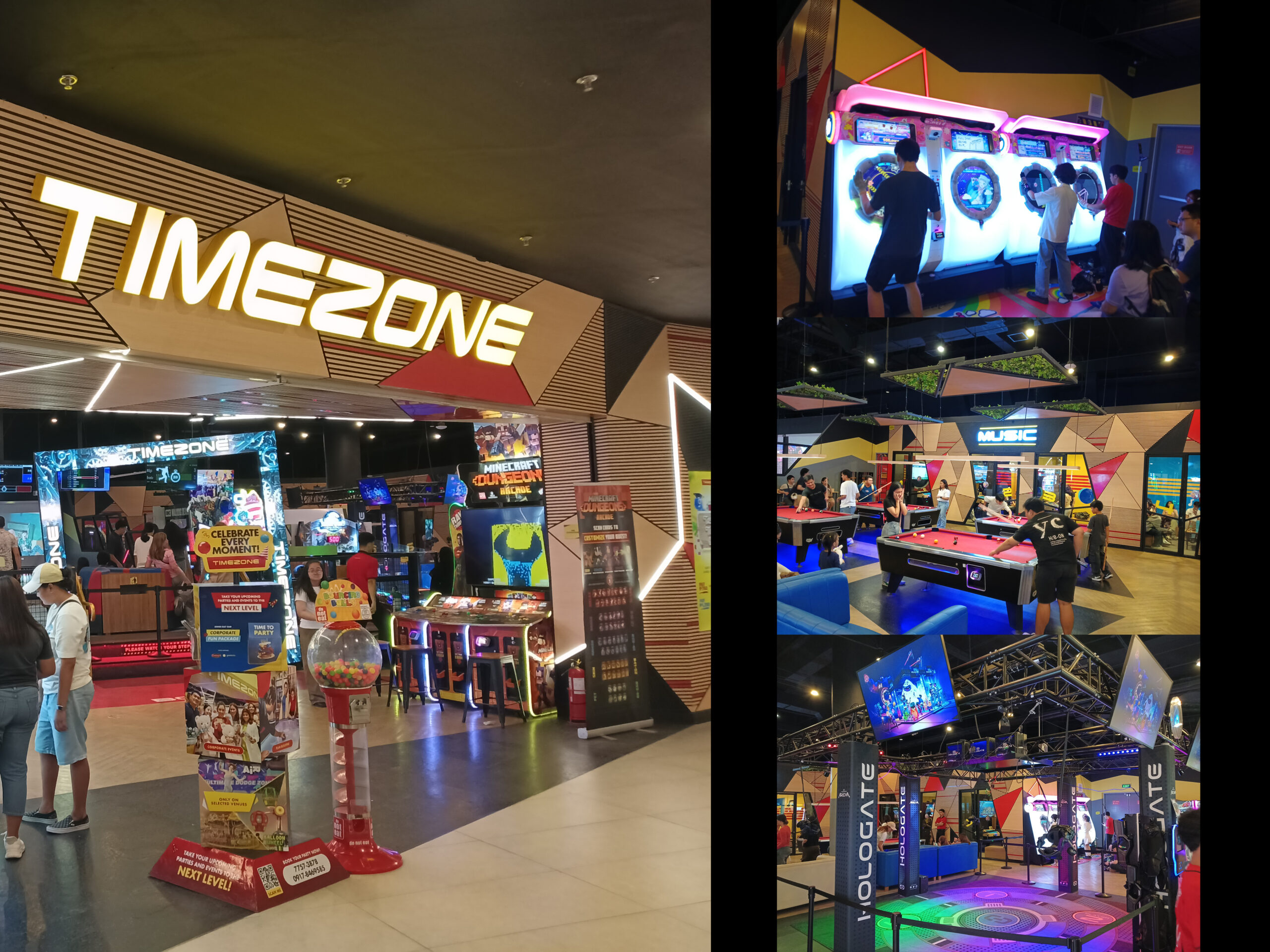
Timezone Trinoma. IMAGE CREDIT: Neo Magtira
One of the most popular arcades in the Philippines, Timezone is actually an international arcade chain, with its first ever branch established in Sydney, Australia. While it was established in 1978, it wasn’t until 1998 when Timezone entered the Philippines for the first time, setting its footing in Ayala Center Cebu after striking a deal with Ayala Lands.
Today, it operates over 100 venues nationwide, as of the time of this writing.
Timezone operates various arcade games across multiple genres. For instance, some branches have dedicated VR (virtual reality) booths such as the Hologate game. Some branches even include recreational games like bowling, billiards, and karaoke.
Timezone is also the home to the popular rhythm game past times enjoyed by many Filipinos, young and old, with games such as Andamiro’s Pump It Up, SEGA’s maimai DX, and more recently Bandai Namco’s Taiko no Tatsujin.
Quantum
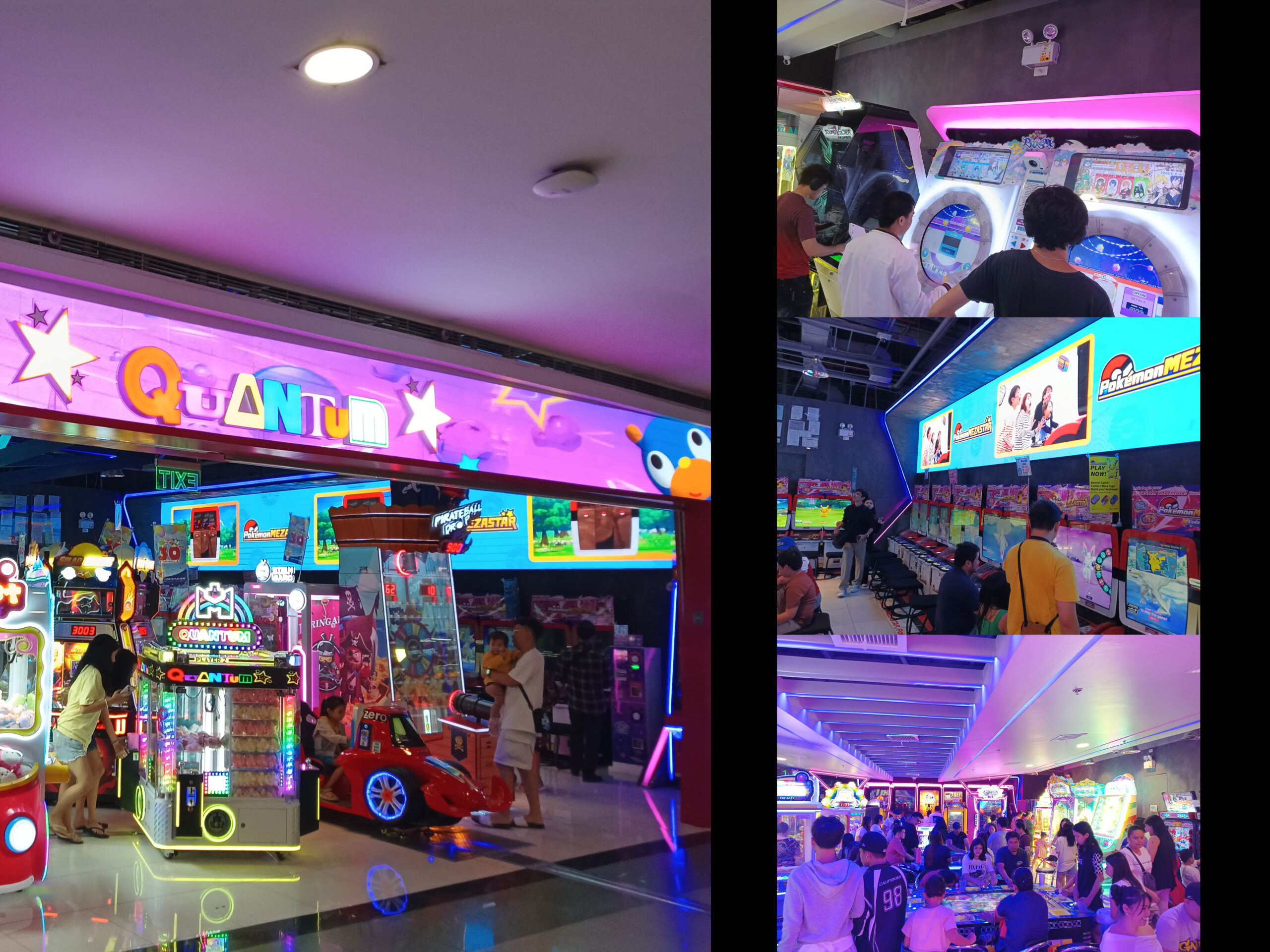
Quantum SM North EDSA. IMAGE CREDIT: Neo Magtira
Quantum Amusement is a major Philippine-based arcade operator established around 1996. While the variety of services it offers pales in comparison to Timezone, it still has a number of arcade games that cover various genres, from simple crane games to action-involved games.
Quantum operates both in Metro Manila and in various provinces around the country.
It is also known to be the number one hub for rhythm games in the Philippines compared to other arcade chains, housing titles such as Konami’s BEMANI series (SOUND VOLTEX, Dance Dance Revolution, DANCERUSH) as well as SEGA’s Chunimai games (CHUNITHM, maimai DX).
Tom’s World
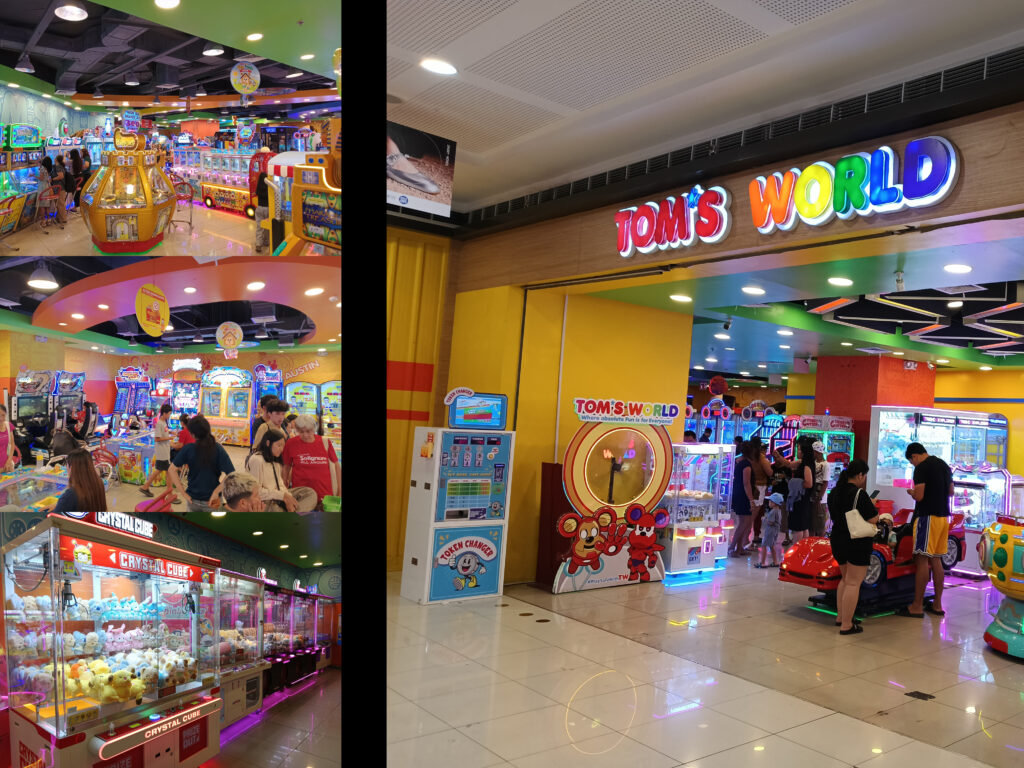
Tom’s World SM Fairview. IMAGE CREDIT: Neo Magtira
Tom’s World is another arcade chain in the Philippines, mainly as a competitor to Quantum Amusement. Their arcades are close to each other, and both of them use the same token system for their games.
The game selection is somewhat smaller compared to its competition however, but nonetheless offers almost the same variety of games across multiple genres.
Outside the Philippines, it also has branches in countries such as China and Taiwan.
World of Fun
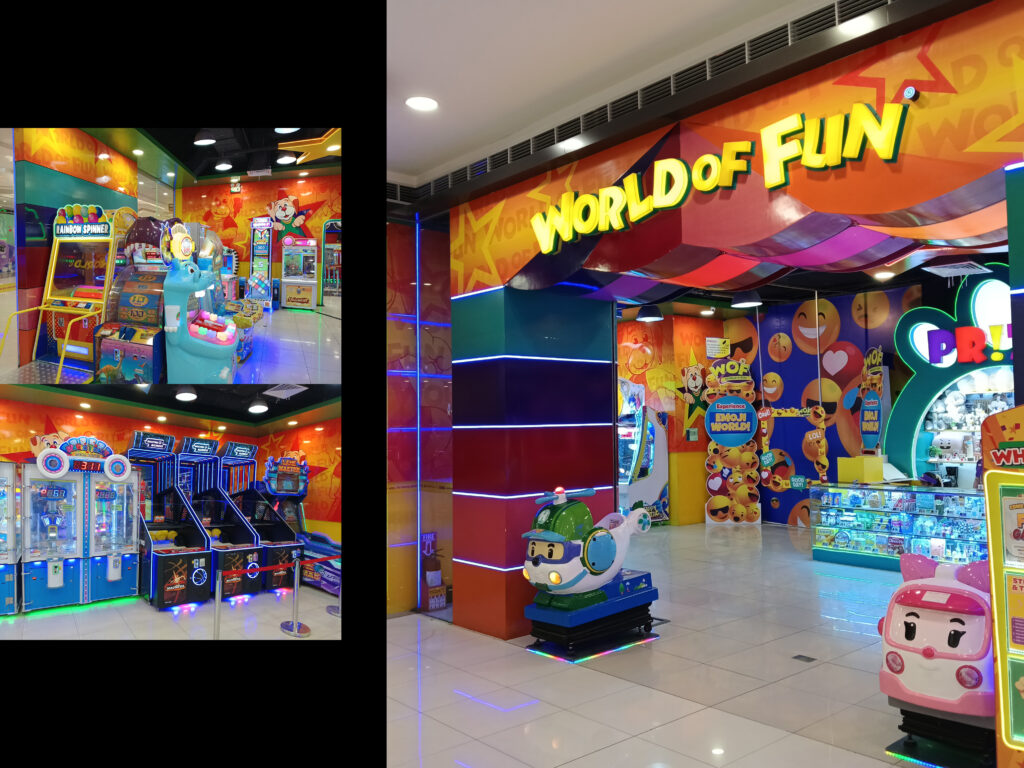
World of Fun SM Fairview. IMAGE CREDIT: Neo Magtira
World of Fun is an arcade chain operating in the Philippines, with a similar scope to Tom’s World. This time, their history is much more well-documented.
The arcade chain first established its store in SM North EDSA in December 1987, as PACO (Pan-Asia Amusement Company) Amusement Center. While its scope is in a much smaller scale compared to its competition such as Quantum and Tom’s World, it still manages to retain its footing over the years, with more than 100 branches established nationwide.
Its game selection is similar to that of Tom’s World, ranging from popular fighting games like Tekken 7, to racing games like Initial D Arcade Stage 8 Infinity. World of Fun also offers arcade games ranging from the mid-1990s to the early dawn of the millennium, so those who have a retro itch can pay a visit to one of their stores.
Challenges facing the arcade industry
Despite steady foot traffic, the industry faces growing challenges.
The rise of home gaming — through consoles, PCs, and mobile devices — has shifted consumer behavior toward more convenient, on-demand entertainment.
Operational costs also remain high, with arcade operators shouldering expenses related to equipment, maintenance, rent, and licensing agreements.
These pressures were further intensified during the COVID-19 pandemic, when prolonged lockdowns forced several smaller operators to close and prompted larger chains to scale back operations.
A community that endures
Yet, even amid these challenges, arcades continue to serve a role that home gaming cannot fully replace: social connection. From casual players to dedicated gaming circles, communities still gather around shared interests — whether competing in rhythm games or revisiting classic titles. Events and informal meetups remain common, reinforcing arcades as spaces not just for play, but for interaction.
As the Philippine arcade industry navigates change, its future may depend less on competing with home gaming and more on embracing what has always set it apart: the shared, in-person experience.
The expense of running an arcade business
Running an arcade business is expensive. Not only does an operator have to cover the costs of each machine, they have to concern themselves with the maintenance costs, marketing costs, inventories, rents and utilities, and many others. One has to keep on eye on the contracts made with various game companies in order to maintain their services.
The sudden pandemic and lockdown
I believe that this played a major part to the decline of local Philippine arcades. When the COVID-19 pandemic struck the whole world in 2020, many businesses were affected, forcing them to shift to a remote business model or to shut down indefinitely.
The arcades in the country were the ones that were hit the most during that time, as many smaller operators were forced to close down due to financial struggles. Even then, the effects are still being felt today, for example, Quantum Amusement had to permanently shut down some of its locations following the pandemic.
A hopeful future
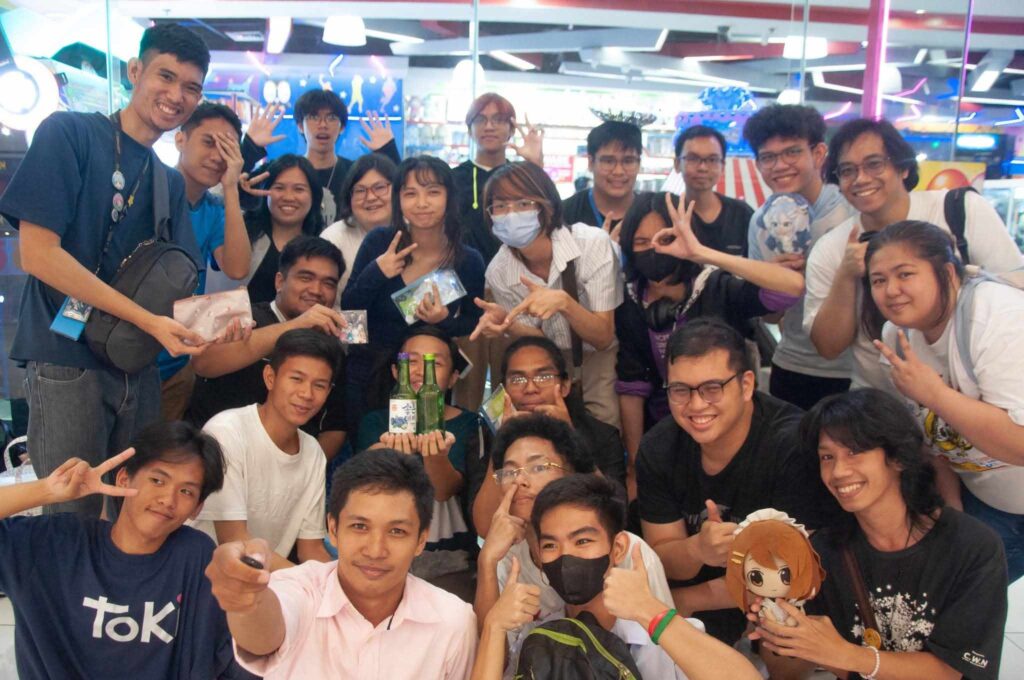
The maimai SM Fairview Team Challenge at Quantum SM Fairview. Photo by Bille Janssen.
Despite the arcade industry’s decline in the country, it is not to say that arcades are going away anytime soon. Even today, many Filipino families and community circles still visit them from time to time — whether after work or school, or simply when they want to hang out and have fun.
In the end, it’s the experience that matters, as well as the friendships and relationships formed along the way.
I myself have been fortunate to become part of a circle of friends in my nearest Quantum branches who share the same interests. Often, we hang out and compete against each other in our maimai sessions while still having fun in the process.