Metro Manila is undergoing a vibrant cultural and lifestyle renaissance as neighborhoods like Poblacion and Escolta evolve into dynamic urban hotspots that interweave history, art, and modern living. These districts are reshaping city life by balancing heritage preservation with contemporary innovation, cultivating communities that attract those seeking deeper, more authentic urban experiences.

Poblacion’s creative revival: From nightlife hub to cultural enclave
Poblacion’s journey from a nightlife-heavy district in Makati to a cultural epicenter epitomizes Metro Manila’s urban reinvention.
Once a red-light area, the arrival of places like El Chupacabra in 2013 sparked a transformative wave of creativity — funky murals, casual street tacos, and local buzz set a new tone for the neighborhood.

Today, Poblacion pulses with independent galleries, innovative dining, speakeasy-style cocktail bars such as Oto and The Spirits Library, and spaces like Pineapple Lab that nurture emerging artists. Design institutions like Design Week Philippines have spotlighted Poblacion as a creative environment highlighting its energy, artistic synergy, and support from the Makati City Government.

Amid this cultural surge, urban experts are working to address growing challenges. A Technical Assistance Panel (TAP) from the Urban Land Institute, which includes AECOM, JLL, and Thinking Machines is guiding efforts to solve issues like traffic, parking, noise, and displacement. Their multi-stage proposals aim for short-term stabilization, medium-term operational improvements, and long-term sustainable, low-carbon, and high-density, authentic growth.
Complementing these efforts is the Makati Poblacion Heritage Conservation Project: a collaboration between Makati City and Palafox Associates that designates a 6.6-hectare Heritage District around landmarks like Museo ng Makati, Poblacion Park, and St. Peter and Paul Church. The master plan promotes adaptive reuse, pedestrian-friendly streetscapes, modernized museum and park facilities, and cohesive heritage-sensitive architecture.

Escolta’s art-led renaissance: Breathing new life into the “Queen of streets“
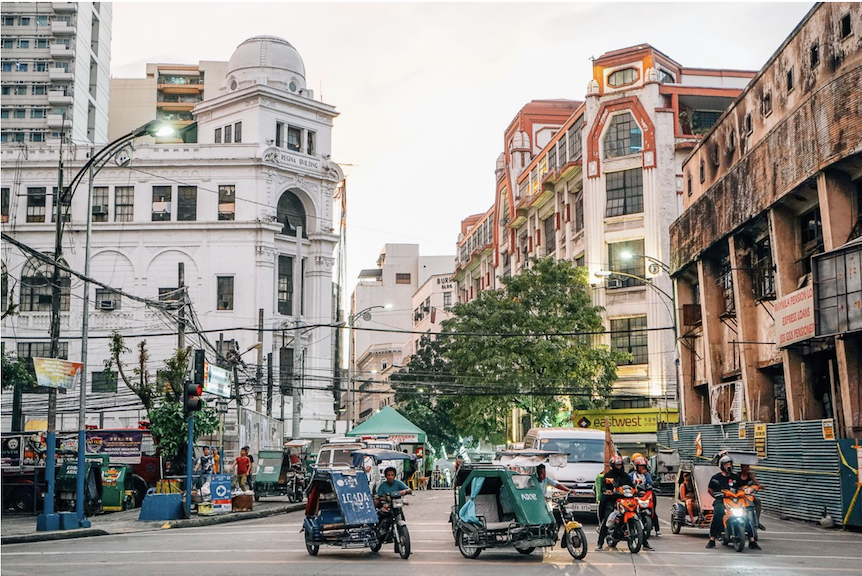
Once called “The Wall Street of Asia,” Escolta was Manila’s premier commercial corridor, rich with art-deco gems and bustling commerce. But decades of decline left its elegant buildings languishing — or facing demolition.

That changed in 2012 when 98B COLLABoratory, led by Marika Constantino, convinced building owners like the Syliantengs to lease creative spaces. The First United Building (also known as the Perez-Samanillo Building) became a hub for artists, architects, designers, and cultural enterprises. Its basement transformed into a public marketplace, artisan cafés, craft breweries, and studios. Monthly Escolta Block Parties and street events helped reignite creative energy along the boulevard.
Landmark architecture like the First United Building and Regina Building (a Beaux-Arts building from 1915) stand as visual reminders of Escolta’s storied past. These spaces are now emblematic of how adaptive reuse and community events can restore cultural significance and economic vitality.
Creating new urban narratives: Where heritage meets modernity
The renaissance of Poblacion and Escolta reveals a broader shift in Metro Manila’s urban ethos — shifting the focus from mere construction to crafting places that tell stories, foster community, and nurture creativity. These neighborhoods have become living laboratories where residents and visitors are invited to co-create experiences through art, communal gatherings, entrepreneurship, and cultural preservation.
Rather than erasing history, this approach builds upon it, using the built environment, public spaces, and cultural programming to anchor identity and authenticity in urban development.
Why these neighborhoods matter for Metro Manila’s future
As Metro Manila grows, Poblacion and Escolta stand as proof that economic growth and cultural preservation can flourish together. They attract tourism, creative talent, investment, and community pride, all while honoring legacy and identity.

Their success underscores how carefully planned regeneration, guided by stakeholders, incorporated into strategic planning, and rooted in heritage—can serve as an inclusive, sustainable blueprint for urban transformation across the city.
Lasting impact: More than just a trend
The “new city cool” of Metro Manila transcends a fleeting urban fad. Poblacion and Escolta showcase how creative revitalization and heritage stewardship can redefine urban living—making places not only vibrant and economically dynamic, but deeply meaningful.
Their stories leave a powerful legacy: urban spaces can be reinvented without losing their soul. They invite future developments to follow suit—crafting neighborhoods where history, creativity, community, and progress coalesce. And as they evolve, they offer inspiration: for residents to reclaim their heritage, for planners to embed culture in design, and for cities worldwide to rediscover that true vibrancy lies in the heart, not just the skyline.