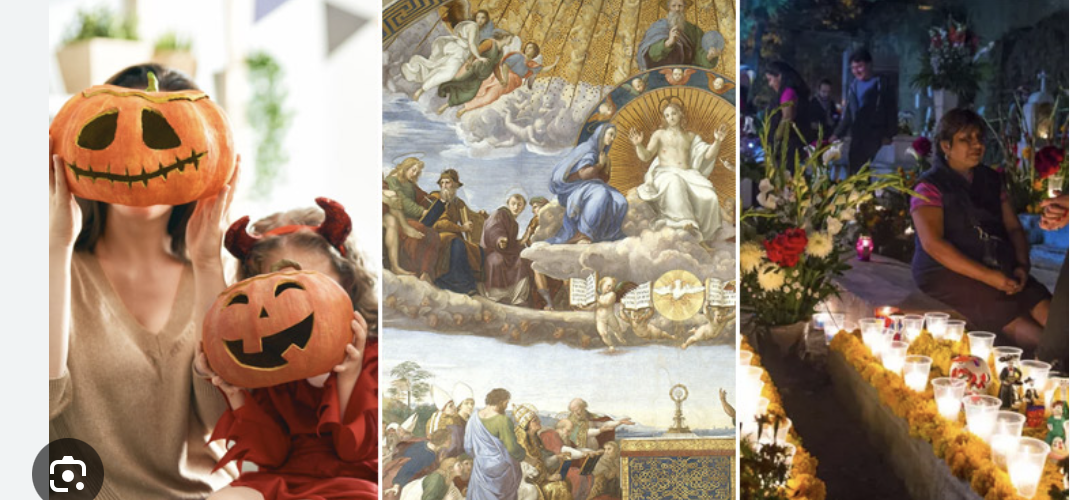
Across the Philippines, cemeteries transform into vibrant spaces of remembrance and reunion as the Halloween season arrives.
Families gather to honor their departed loved ones, bringing flowers, candles, and home-cooked food. Children run about, elders share stories, and laughter mingles with prayer.
This is Undas — the Filipino observance of All Saints’ Day and All Souls’ Day — a living tradition that continues to reflect the nation’s deep reverence for family, faith, and ancestry.
Unlike in many Western countries, where All Souls’ Day is marked by solemn church services and quiet reflection, the Filipino Undas is a lively family reunion. It blends spirituality with festivity, an affirmation that death, in the Filipino view, is not an end but a continuation of kinship and love.

Weeks in advance, families prepare for homecomings to ancestral towns. Tombs are repainted, candles and flowers bought in bulk, baskets of food packed for vigils that often last all night. Cemeteries, often seen as somber spaces elsewhere, become temporary homes filled with prayers, laughter, and stories.
As the National Museum of the Philippines explains, customs such as atang (food offerings to spirits) and pangangaluluwa (songs or chants for souls) reflect deep pre-colonial beliefs that the departed remain part of the community.
However, in recent years cultural observers have noted a slow shift. The traditional pangangaluluwa, once a meaningful ritual where villagers sang for the souls in exchange for food or alms is being replaced by urbanized, Western-style trick-or-treating.

While both involve costumes and door-to-door visits, the intentions differ as pangangaluluwa was a spiritual act of intercession for the dead, while trick-or-treating celebrates play and culture.
Still, many families continue to hold fast to tradition.
For them, Undas is not merely about lighting candles or saying prayers — it is about reaffirming identity. It is a yearly pilgrimage that strengthens family ties and honours the memory of those who came before.
“Every year, we visit this place, bring flowers, light candles, and offer prayers. It has become our tradition, and it’s also our way of bonding as a family while cherishing the memory of our loved ones who have gone ahead of us.” said Joseph, a devout Catholic who visits the cemetery every year.
Balancing religious solemnity and playful celebration during Halloween season
In recent years, Undas has also come to reflect the Filipino ability to balance reverence with joy, a harmony between faith like having rituals, and festivity like Halloween parties. While the days are rooted in Catholic observance, marked by prayers, Masses, and visits to the cemetery, the atmosphere often shifts into one of lighthearted gathering. Families share food, play music, and even set up tents for overnight vigils, turning what might seem a mournful ritual into a celebration of life.

Whether through whispered prayers or laughter over shared meals, Undas embodies a uniquely Filipino spirituality, one that honors the sacred while embracing the joy of togetherness.
Karla emphasized “We’re able to balance it because, usually, it’s the younger ones who really enjoy Halloween, like going trick-or-treating or attending Halloween parties. Meanwhile, we adults tend to focus more on the usual preparations for visiting the cemetery, like bringing food, prayer materials, candles, and other things.”
“But sometimes it also depends on the day. Since the celebration of Halloween is on the 31st, that’s when we usually have our Halloween party. Then, when November 1 and 2 come, that’s when we prepare on our religious practices like panalangin sa yumao and all”
In an age where Western-style Halloween parties and trick-or-treats dominate the season, Undas continues to hold its ground as a heartfelt expression of faith, family, and tradition. It’s more than a day of remembrance — it’s a reunion, a celebration of life shared with the departed.
For many, the yearly pilgrimage to the cemetery is a quiet promise that no one is ever truly forgotten. Every candle lit, every meal shared, and every whispered prayer keeps the bond between generations alive. Amid the glow of candles and the hum of voices, Undas reminds us that in the Filipino heart, remembering the dead is not a duty, it’s an act of love that keeps the living together.