Bogo City, Cebu – Inside the Department of Social Welfare and Development (DSWD)’s Visayas Disaster Resource Center, the sound isn’t one of panic but of purpose. It’s the rhythmic scrape of packing tape, the low rumble of dollies on concrete, and the murmur of countless volunteers — a blur of motion focused on mountains of rice, coffee, and canned goods.
Every box packed, every truck loaded, has one destination in mind: Bogo City and the battered northern towns of Cebu, still trembling from last week’s powerful 6.9-magnitude earthquake.

According to authorities, at least 69 people have been killed and dozens more injured after the quake struck central Philippines on Tuesday. Most of the victims were from Bogo, a small town on one of the largest islands in the Visayas — the country’s central region and the area closest to the earthquake’s epicentre.
The earthquake comes barely more than a week after the Philippines was hit by back-to-back typhoons that killed more than 20 people, compounding the suffering of many communities.
Images coming out of Bogo show body bags lined up on the streets and hundreds of people being treated in makeshift tent hospitals. Officials have warned of “a lot of damage” and have appealed for volunteers with medical experience to help deal with the mounting injuries.

Buckled and cracked roads, fallen bridges, and collapsed structures have made access difficult for emergency services. Power lines in many areas remain down, cutting off communication and complicating rescue efforts.
Seven of those who perished in Tuesday’s earthquake in Bogo lived in a village built to house survivors of Typhoon Haiyan, which struck central Philippines and killed more than 6,000 people.
In the nearby municipality of San Remigio, tragedy struck during a basketball game when the quake hit. According to an emergency response official, nearly 20 people at the event were rushed to the hospital, and at least one person later died. Officials from the National Police and Fire Bureau say they are prioritizing search and rescue operations, restoring electricity, and delivering relief supplies to affected areas.
On Wednesday evening, Bogo was shaken again by a 4.7-magnitude aftershock, with tremors felt as far as Cebu City and the neighbouring Leyte Islands. No additional casualties were reported.
Cebu’s archbishop has since urged the faithful to stay away from churches pending structural assessments — a significant move given Cebu’s rich history as one of the first Philippine islands colonized by Spain in the 1500s and home to many centuries-old churches.
DSWD: Bringing order to the chaos of relief efforts
To understand the urgency of the response, one only needs to look north toward Daanbantayan, about 23 kilometers from Bogo City and very close to the earthquake’s epicenter. There, along roads cracked and fissured by the quake, stories like that of 77-year-old Jesus Alajid have become tragically common.
Alajid, a Lumad (native) resident of Barangay Pajo in northern Cebu, walked several kilometers under the punishing sun just to get a single bottle of water — a stark reminder of how quickly the most vulnerable, especially those in far-flung, “last mile” villages can be cut off.

It is this desperation that brought the leadership of the DSWD directly to the streets of Bogo.
They didn’t just send supplies — they brought leadership, determined to turn President Ferdinand Marcos Jr.’s directive that “no family should go hungry” into tangible action.
On Thursday, DSWD Undersecretary Diana Rose Cajipe and Regional Director Shalaine Marie Lucero were on the ground, personally overseeing the flow of aid.
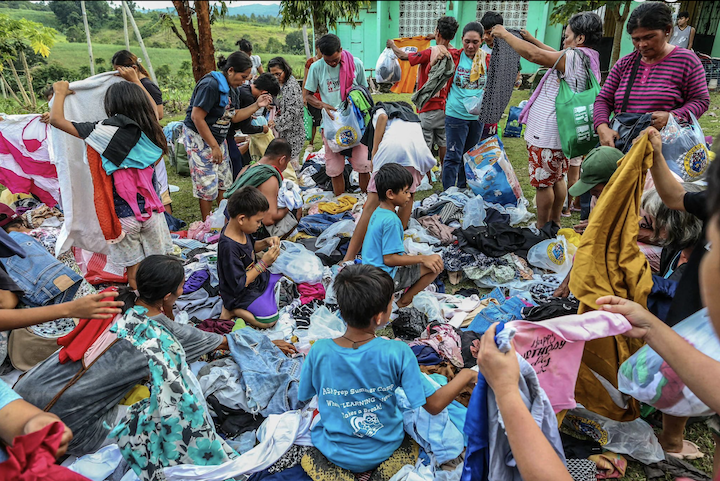
They moved through crowds of displaced families, ensuring they received not only the staple Family Food Packs but also ready-to-eat meals — for many, their first hot meal in days.
Their mission went beyond food; the team also visited the Cebu Provincial Hospital, checking on the injured and offering a human touch amid the logistical whirlwind.

Their presence aims to cut through the frustrating paradox that has defined the early relief efforts.
However, the early relief phase was not without challenges. An outpouring of generosity from private groups, while well-intentioned, caused traffic jams that gridlocked major roads leading into northern Cebu. Some aid trucks overheated and broke down before they could even reach their destinations.
Strategy, structure, and hope

To address this, the government has introduced a coordinated response strategy, urging donors to channel assistance through official networks. Using a new digital “Emergency Response Tracker,” authorities are mapping out who has received aid and who is still waiting — turning a chaotic flood of goodwill into a targeted, effective stream of relief.
For families who felt their pleas were being lost in the noise, the sight of a structured, government-led distribution in Bogo is a profound comfort.
As the sun sets and another DSWD truck rumbles out of Mandaue, it carries more than just life-sustaining goods.
It carries hope — a promise, packed in a box — that in the long journey to recovery, no one will be left to walk alone.