On May 12, Filipinos across the nation will head to voting centers for the 2025 midterm elections (Halalan 2025) — a pivotal moment that will decide the Senate, local officials, and shape the country’s legislative future. As the nation gears up for this critical vote, the battle for influence and power (including the influence of troll farms), extends far beyond the ballot box, unfolding in newsfeeds, comment sections, and heated discourse online. The very fabric of Philippine democracy is under assault.
The information network, home to today’s social media giants, has been a pivotal tool in dismantling the barriers to information. A gateway to free speech and open dialogue, social media has historically enabled authentic discourse regarding pop culture, politics, finance, and more. But as influence online deepens, this same network has become a double-edged sword: shaping opinions, spreading disinformation, and threatening the pillars of Philippine democracy.
The architects of this network have proven that truth is a commodity, and for the right price, it can be bent or buried. In this system, truth is distorted, weaponized, and premeditated by an online mercenary: the troll farm.
“Troll farms” may sound like a joke, but behind the name lies a system built to deceive, manipulate, and profit from disinformation. These troll farms are groups of two or more individuals organized to create or spread disinformation, deliberately false information. The operation of troll farms, increasingly sophisticated, pose a direct threat to the integrity of the upcoming elections.

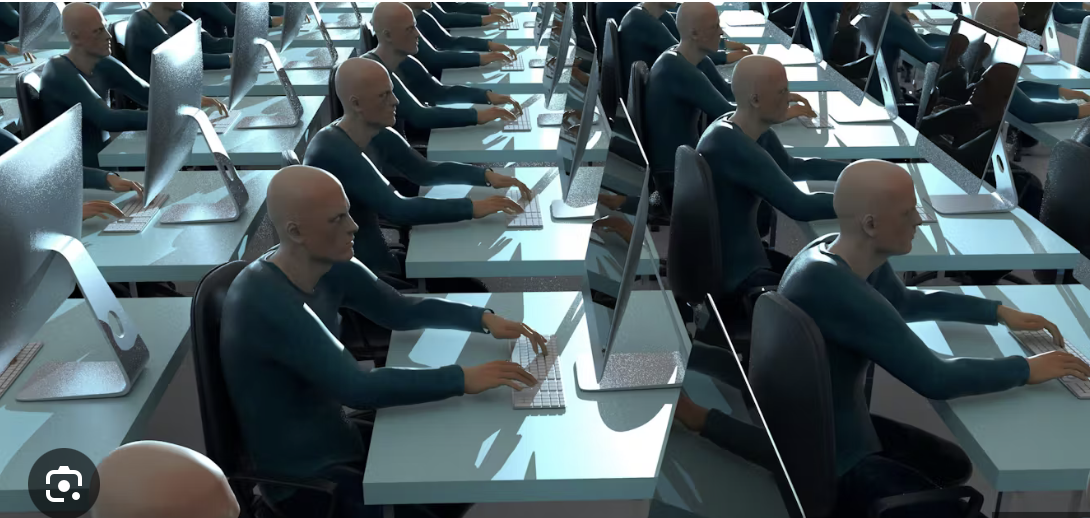
In the Philippines, these operations run like agencies — an army of “trolls” are paid above minimum wage and employed to manage fleets of fake and burner accounts. Their mission: hijack online spaces, plant narratives, provoke outrage, and flood timelines with premeditated noise.
But the “chief architects” of this scheme stay hidden — PR and advertising professionals and former journalists, who play the mastermind. These masterminds behind this global operation keep the majority of the profit, followed by influencers and celebrity endorsers who play a pivotal role in spreading disinformation, with ordinary citizens, often desperate for work, relegated to the lowest tier, serving as the faceless, unknown agents that fuel the narrative.
What looks like organic public opinion is anything but — it is manufactured by the individuals who shape our information and communications landscape to influence, distract, and deceive, all for a hefty price: our democracy. This manipulation erodes trust in institutions and undermines the very foundation of fair elections.
Troll farms target ‘Halalan 2025’: The fight for election integrity
The country is no stranger to troll farms. It’s an international business with growing networks in Russia, Croatia, the United States, the Philippines, and many more. With Halalan 2025 just around the corner, the Philippines has found itself at the center of an international disinformation campaign, with foreign actors actively seeking to sway the outcome.

On April 25, a Senate investigation led by Senate Majority Leader Francis Tolentino revealed that China-sponsored troll farms were hired to spread disinformation on social media. This revelation underscores the severity of the threat and the extent to which external forces are attempting to interfere in Philippine democratic processes.
Assistant director general of the National Security Council, Jonathan Malaya, stated, “There are indications that information operations being done in the Philippines are Chinese state-sponsored and are interfering in the forthcoming elections.” This is not merely a matter of misinformation; it is a calculated assault on Philippine sovereignty.
This investigation on the use of troll farms found a contract between the Chinese embassy in the Philippines with the local boutique marketing firm, Infinitius Marketing Solutions, to put China in a good light amid the West Philippine Sea conflict.
The partnership aimed to get leaders who align with China’s vision, to win — proof that “they [China] are intervening directly in our national conversation,” said Tolentino. The implications of this foreign interference are profound and demand immediate attention.
Yet, this isn’t the country’s first time falling victim to politically loaded disinformation led by troll farms. A University of Oxford study found that as early as 2016, former President Rodrigo Duterte’s campaign was reportedly backed by over P10 million worth of troll operations, kickstarting a tactic that would go on to redefine political campaign strategies in the Philippines. This normalization of disinformation using troll farms as a political tool has had a lasting and damaging impact.
Disinformation’s shadow: Lessons from 2022 Presidential elections

During the 2022 Presidential election, candidates former Vice President Leni Robredo and current President Ferdinand Marcos Jr. were the primary targets of disinformation. Tsek.ph, a collaborative fact-checking initiative comprising 34 partners from academia, media, and civil society, found that 92% of fact checks about President Marcos Jr. were false or misleading information in his favor. On the other hand, 96% of disinformation targeting Robredo was negative.
These figures expose the systematic and targeted nature of these disinformation campaigns.
These figures aren’t just statistics — they reflect a deeper reality: one where disinformation isn’t an accident, but a strategy designed to dismantle democracy as we know it. Democracy dies when free thought and truth are commodified for political gain and power. These mercenary operations work to feed power and dismantle the truth, creating a toxic environment where informed civic participation becomes increasingly difficult.
Troll farms and the calculated spread of disinformation threaten our democracy as a nation. Troll farms do more than distort truth — they create echo chambers, normalize hate, and erode trust in institutions. Ultimately, they harvest a seemingly never-ending cycle of corruption and injustice, leaving the impoverished and vulnerable right where they are. The consequences of this manipulation are felt most acutely by the most marginalized members of Philippine society.
Citizens who have been left vulnerable, on the cusp of survival, due to this unjust system are now the very source that influences our socio-economic and political systems. For a high price, the cost of this attempt to get by is costing Filipino lives justice, transparency, and a better future. The production, spread, and amplification of disinformation is not to be ignored or let go. The stakes are simply too high.
Anti-troll farm bill seeks to protect Halalan 2025 from disinformation

House Bill 11178, or the Anti-Troll Farm and Election Disinformation Act, was filed by Representatives Margarita Nograles-Almario and Cheeno Miguel Almario on December 5, 2024. Aimed to hold disinformation peddlers such as troll farms, vloggers, influencers, and political candidates accountable for creating disinformation, this bill represents a crucial step in the fight against online manipulation.
The bill identifies three prohibited acts:
- Bans creating, maintaining, operating, funding, sponsoring or collaborating with troll farms.
- Prohibits producing disinformation that damages a political candidate’s reputation — this includes hiring individuals such as vloggers and influencers to amplify disinformation for political gain.
- Forbids coordinating with or instructing third parties, including media outlets and vloggers, to generate and disseminate disinformation against a candidate.
The bill also seeks to protect those who report on disinformation campaigns or a troll farm’s activity under the Whistleblower Protection Act of 2021, recognizing the courage required to expose these operations.
Individuals found guilty of any of these acts will face 6-12 years in prison and be fined P500,000 up to P2 million. Organizations will be fined between P5 and P10 million, and will lose business permits and licenses permanently. The highest penalties will be imposed on organizations or troll farms, followed by political candidates, vloggers, and influencers, reflecting the scale of their potential damage.
The bill mandates the collaboration of the Department of Education, the Commission on Higher Education, and the Department of Information and Communications Technology (note the corrected Department name) to create educational campaigns aiming to promote voter awareness and digital literacy, equipping citizens with the tools to discern truth from falsehood.
As Halalan 2025 approaches, staying vigilant online is more crucial than ever, particularly in Metro Manila, where digital engagement is high and the potential for manipulation is significant. Voters must commit to independent research, cross-checking information, and critical thinking. Relying on sources like the Commision on Elections (COMELEC) and independent fact-checkers such as VERA Files may help in cutting through the noise to protect your vote from deception. Local news outlets and community organizations in Pasig City also play a vital role in providing accurate and unbiased information.
There are truths we feel and facts that we know, but while truths may shift with perspective, facts remain indifferent to belief or bias. In a system where narratives and truths are politically motivated, staying informed, educated, and critical is the most powerful stand that can be taken. This power and agency, cast through a vote, shape the institution we live in, the future of the Philippines, and the livelihood of its people. The integrity of that vote, and the democratic process it represents, is what is at stake.