
Whenever Holy Week approaches, the municipality of Cainta in Rizal province undergoes a significant transformation, evolving into a vibrant stage for the expression of faith, dramatic representation, and profound devotion.
Esteemed as the “Senakulo Capital of the Philippines,” Cainta’s Lenten traditions have always represented an extraordinary confluence of religious fervor, cultural artistry, and a strong community spirit — diligently nurtured and transmitted across generations for over a century.
Indeed, Holy Week in Cainta transcends the conventional understanding of a religious holiday, offering both residents and visitors a deeply immersive exploration of Filipino spirituality and cultural heritage.
The Senakulo in Cainta: An unparalleled passion play

IMAGE CREDIT: Gids Stories (FB)
The Senakulo, a theatrical passion play meticulously narrating the life, suffering, death, and resurrection of Jesus Christ, serves as the central focus of Cainta’s Lenten commemorations.
This tradition acquired its distinctive character in 1904 within the area then known as Barrio Dayap (now Barangays Sta. Rosa, Sto. Niño, and Sto. Domingo), developing from modest Pasyon recitations into a comprehensive dramatization.
Eighteen distinct groups participate annually, each contributing unique interpretations and stylistic approaches. Notably, the Samahang Krus sa Nayon and the Samahang Nazareno are distinguished for their meticulous staging and impassioned performances, garnering dedicated followings and national recognition for their commitment.
The Senakulo is presented nightly from Palm Sunday through Easter Sunday, attracting audiences eager to witness the poetic dialogue, vivid costumery, and evocative scenes that bring the biblical narrative to life.
The grand parade of Panata: Cainta’s solemn spectacle on Good Friday

IMAGE CREDIT: Krizzia Anne Santos Tupas (FB)
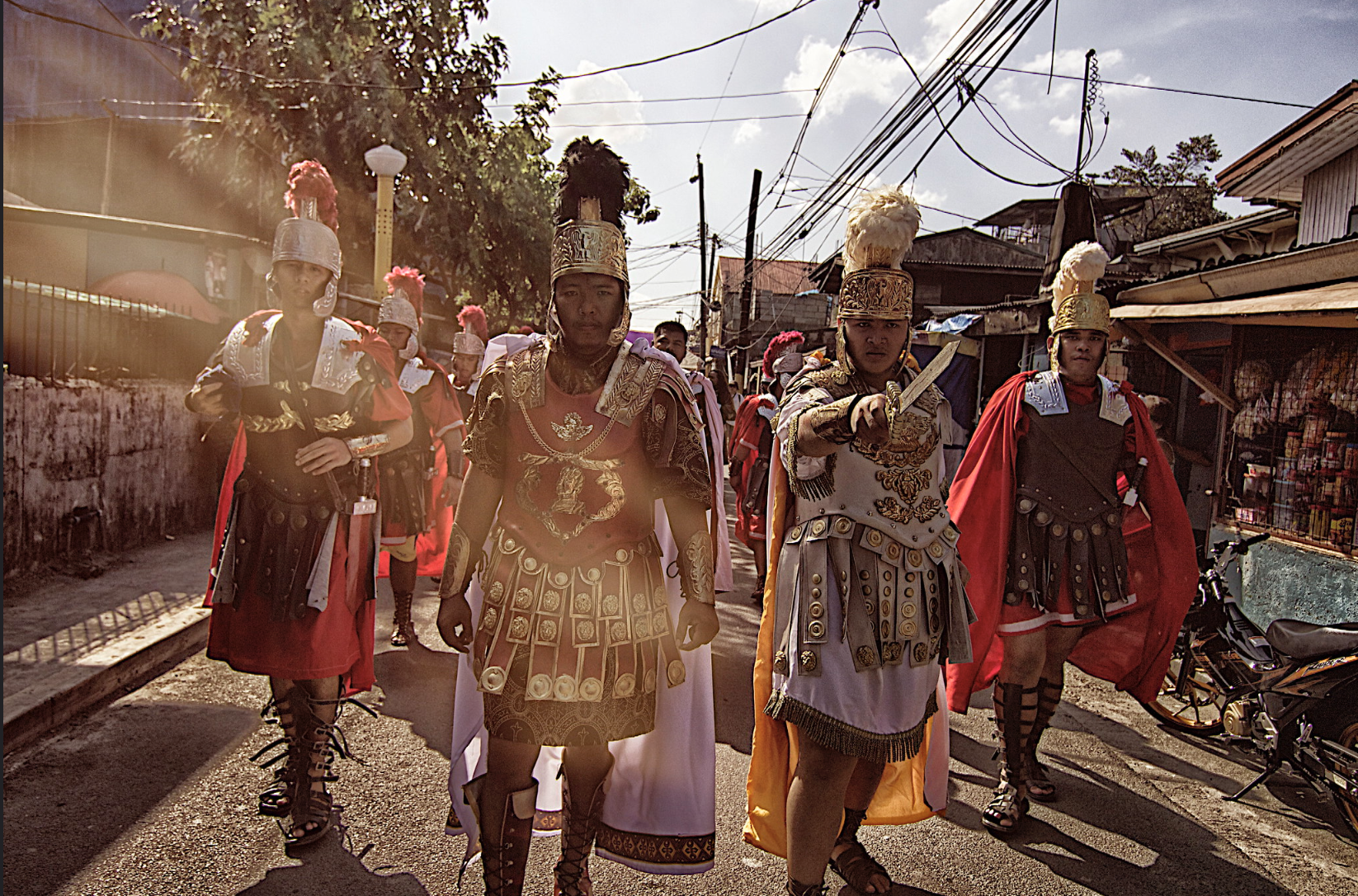
A highly anticipated highlight of the week is the “Parada ng Panata,” or Grand Parade of Devotion, observed every Good Friday morning. Commencing as early as 6:00 a.m., this vibrant procession transforms A. Bonifacio Avenue into a dynamic tableau of faith and cultural expression.
Organized by entities such as Krus ng Kalbaryo Inc. and supported by the Senakulo performers, the parade vividly portrays the Stations of the Cross.
Participants don elaborate, historically inspired attire representing key biblical figures – Roman soldiers in full armor, Pontius Pilate, Mary Magdalene, the sorrowing Virgin Mary, and Jesus Christ bearing the cross.
The procession incorporates not only individuals on foot but also horse-drawn chariots, enhancing the dramatic impact and historical authenticity of the representation.
As the parade progresses through the streets, brief yet poignant reenactments unfold, depicting events such as Jesus’ triumphant entry into Jerusalem, the scourging at the pillar, the carrying of the cross, and the crucifixion. The measured beat of drums and solemn chants permeate the atmosphere, creating an environment imbued with devotion and contemplation.
This parade transcends mere theatrical display, serving as a communal act of penance and remembrance.
This year, local officials participated in the procession, including former Mayor and current municipal administrator Johnielle Keith Nieto. Nieto has previously portrayed Pontius Pilate, underscoring the profound personal and civic commitment to this enduring tradition.
Following the parade, the participating groups continue their performances at venues such as Tanghalang Cainta, One Arena, and Liwasang Bayan, ensuring that the narrative of Christ’s passion resonates throughout the day.

This parade transcends mere theatrical display, serving as a communal act of penance and remembrance.
This year, local officials participated in the procession, including former Mayor and current municipal administrator Johnielle Keith Nieto. Nieto has previously portrayed Pontius Pilate, underscoring the profound personal and civic commitment to this enduring tradition.
Following the parade, the participating groups continue their performances at venues such as Tanghalang Cainta, One Arena, and Liwasang Bayan, ensuring that the narrative of Christ’s passion resonates throughout the day.
Penitensya: Profound acts of devotion

In addition to the Senakulo and the parade, intense penitential rituals are observed during Cainta’s Holy Week.
Self-flagellation and, on occasion, crucifixion reenactments by devotees form part of the Penitensya. While these acts may appear intense to external observers, they represent deeply felt expressions of repentance and solidarity with the suffering of Christ.
Many participants view these rituals as acts of atonement for personal transgressions or the fulfillment of vows undertaken during times of hardship. The physical pain endured is regarded as a spiritual offering, a tangible testament to faith that transcends verbal articulation. The sight of barefoot devotees traversing long distances, bearing heavy crosses, or enduring scourges powerfully embodies the profound spirituality that animates Cainta’s Lenten season.
A community sustaining the tradition
A defining characteristic of Cainta’s Lenten observances is the robust sense of community and the remarkable continuity of these practices. These traditions are not merely performances; they are lived experiences, conscientiously passed down through successive generations.
Families frequently have members who have participated in the Senakulo or penitential rites for decades. The Samahang Nazareno, for instance, comprises over 200 devotees, nearly half of whom are youth and children. For many young residents of Cainta, involvement in the Senakulo represents a significant rite of passage—a means of connecting with their faith, heritage, and community identity.
Local educational institutions, barangay councils, and civic organizations play crucial roles in organizing and supporting these events. Volunteers contribute their time and effort to costume production, set design, crowd management, and safety measures, ensuring the seamless continuation of these traditions year after year.
Preserving a cultural and spiritual pilgrimage

Each Holy Week, Cainta becomes a significant pilgrimage site, drawing thousands of devotees and inquisitive tourists. The municipality’s unique synthesis of solemnity and spectacle offers a deeply moving experience that resonates on spiritual, cultural, and social levels.
Visitors have the opportunity to attend nightly Senakulo performances at venues such as Tanghalang Cainta and One Arena, where the artistry and profound devotion of the actors are evident. The Parada ng Panata attracts substantial crowds on Good Friday morning, with individuals lining the streets to witness the compelling reenactments.
Complementing these customs, Lenten in Cainta is also a celebration of the hospitality and cultural richness of the area. Street vendors offer traditional Filipino delicacies such as bibingka and suman, adding a flavorful dimension to the spiritual journey. These indigenous treats, enjoyed amidst the solemnity of Holy Week, reflect the town’s rich culinary heritage.
A vital living heritage
In an era where numerous traditional practices face the risk of obsolescence, Cainta’s steadfast commitment to preserving and revitalizing its Lenten traditions is truly inspiring. Town leaders, cultural advocates, and residents alike recognize these rituals as vital expressions of their collective identity and community cohesion.
Ongoing efforts to document, promote, and adapt the Senakulo and other associated rites ensure their continued relevance and accessibility to younger generations. Workshops, educational programs, and collaborative initiatives with local artists contribute to maintaining the vibrancy and enduring significance of this tradition.
The journey of reflection and enduring hope
For those who witness or actively participate in Cainta’s Lenten traditions, the experience often proves to be transformative. It provides a dedicated time for reflection on themes of sacrifice, redemption, and renewal—the very essence of Holy Week. It is also a celebration of faith actively lived within a community, expressed through creativity, and sustained by remarkable resilience.
Cainta’s Lenten season is a vibrant and intricate tapestry – woven with the threads of history, profound devotion, artistic expression, and shared humanity. It extends an invitation to all, regardless of belief, to pause, contemplate, and be moved by a narrative that continues to inspire hope across successive generations.