
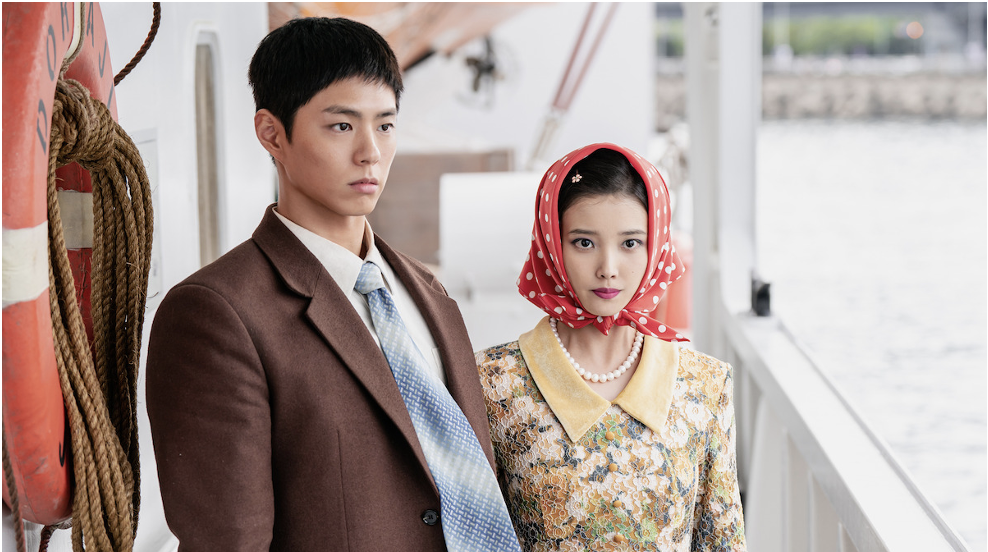
Chaos and uncertainty have always been a part of life; however, these unstable and bitter times are often the moments that shape us for the better, teaching us that life is what we make it. Netflix’s newest Kdrama, When Life Gives You Tangerines, hit the streaming platform’s Top 10 in 42 different countries upon its release, capturing the world with its story.
When Life Gives You Tangerines is a heartwarming tale of love, loss, and the unbreakable bonds of family. Its international title cleverly reimagines the saying “When life gives you lemons, make lemonade” — swapping lemons for tangerines in a nod to Jeju Island, the show’s picturesque setting, famed for its vibrant tangerine orchards.
The Korea Herald called it “the most Korean yet universally relatable series,” for its honest portrayal of love, sacrifice, family, and loss – themes that transcend language, time, and geography. The show follows Ae-sun, a spirited young girl from Jeju in the 1960s, and traces her life over the next 50 years.
Navigating natural disasters, economic setbacks, political strife, and the complexities of life, Ae-sun, alongside her childhood love and husband, Gwan-sik, and their children, weathers each storm with resilience, finding ways to sweeten life’s bitterness.
Kim Won-seok, the director of Tangerines, described Tangerines as “a tribute to the generations of grandmothers, grandfathers, fathers, and mothers who have lived fiercely, and a song of encouragement for the daughters and sons who will navigate the world ahead.”
A mother’s sacrifice: The enduring power of family bonds

Young Ae-sun (left) and her mother (IMAGE CREDIT: Netflix)
The show opens with a glimpse into Ae-sun’s childhood, shaped by her mother, a haenyeo – one of Jeju’s iconic female free divers.
Despite suffering from a debilitating lung condition, Ae-sun’s mother dives relentlessly to support their family, all while trying to steer her daughter away from the same harsh path. This early portrayal lays the foundation for Ae-sun’s own fierce commitment to ensuring a better life for her children. Faced with her mother’s passing, Ae-sun finds love, comfort, and family in her first love, Gwan-sik. Known for their unparalleled love and devotion for one another, together, they build a family grounded in love and selflessness.
From selling Gwan-sik’s fishing boat — the family’s main livelihood for nearly two decades — to giving up their home, the story powerfully portrays the depth of a parent’s love and sacrifice for their children. Despite their financial struggles, Gwan-sik and Ae-sun never hesitate to put their children’s well-being and future first.
Yet, this unwavering sacrifice often leaves their children feeling indebted — a sentiment reflected in their eldest, Geum-myeong, who begins sending part of her salary home as soon as she starts working.
This cycle of sacrifice and guilt is all too familiar, especially in Filipino families, where the concept of utang na loob often compels children to set aside their dreams to repay their parents’ sacrifices.
Family life: The double-edged sword of sacrifice

Ae-sun (left) and Gwan-sik with their children (IMAGE CREDIT: Netflix)
Tangerines captures both sides of this reality — highlighting Gwan-sik and Ae-sun’s quiet endurance for the sake of their children, and Geum-myeong’s internal struggle as she grapples with the guilt of her family’s hardships, all to support her education in Seoul and abroad. Family – by blood, by choice, or by circumstance – anchors us during life’s fiercest storms.
They help us carry the load when it gets too heavy, celebrate our triumphs, mourn our losses, and hold us together when we fall apart. Yet, it is often family that can hurt us the most. As said in the series, “Parents only remember what they regret, while children only remember their disappointments,” the complexity of familial relationships is jarring and thought-provoking when seen through the perspective of parents and children.
Though Gwan-sik and Ae-sun find themselves in conflict with their children, one thing is made clear in the show – this complex relationship is deeply intertwined in love. It often involves having the empathy, compassion, and forgiveness to see past these regrets and disappointments, simply because in their own ways, everyone is just trying their best.
When Ae-sun and Geum-myeong find themselves in conflict over money, tensions subside once Ae-sun discovers Geum-myeong’s pregnancy. Through the experience of childbirth, Geum-myeong begins to understand her mother’s sacrifices, ushering in a newfound respect and emotional reconciliation with her mother. Thus, it is through growth and change that children are often able to resonate with and understand their parents better. As understanding deepens, life carries on, sometimes bringing change so painful that it takes the very people we cherish.
Navigating grief, finding strength in enduring bonds

Older Ae-sun (left) with her daughter, Geum-meyong (IMAGE CREDIT: Netflix)
In Tangerines, Ae-sun experiences the most painful loss of all – her youngest child. She navigates her decades-long grievance with love, picking herself up for her family. Loss is never easy to experience. It’s a culmination of heartache, regret, love, and the unspoken what-ifs. Yet, loss and grief are a reminder that love was and is still abundant in life – to miss someone’s presence so much is a testament to the love that flows between individuals, families, and communities.
Ae-Sun experiences the loss of her mother, child, and husband, and with each loss, we witness her transformation – grief becomes strength. Through these losses, she acknowledges the life of love she’s lived. Ultimately, a loss of life is never a loss of love. Love – the very thing that keeps the world turning. It comes in many forms: romantic, platonic, and familial. It is at the very center of life.
The love of a mother and father, in this instance, is what keeps Gwan-Sik and Ae-Sun’s family afloat – through the lives of their children, we see how love becomes the catalyst that keeps food and dreams at the fingertips of their family. In Tangerines, we see how love sustains not just lives, but dreams, fueling the tireless work of parents and the endless aspirations of their children.
The series is more than a story about one family – it’s a gentle yet powerful reflection of life’s intricacies: the sacrifices parents make, the burden children carry, the love that carries us through storms, and the grief that drives us to grow.
Through Tangerines, we’re reminded that family is not perfect – it’s messy, flawed, and often painful – but at its core, it is rooted in a love that endures. Through narrative, characters, and stories that resonate, When Life Gives You Tangerines invites us to reflect on our own relationships, obligations, and generational ties.
It teaches us that even in life’s bitterest seasons, sweetness can still be found – not just in fruit, but in forgiveness, understanding, and the enduring warmth of home. It is at life’s toughest moments that we must turn towards our families and communities to sweeten the sour.