
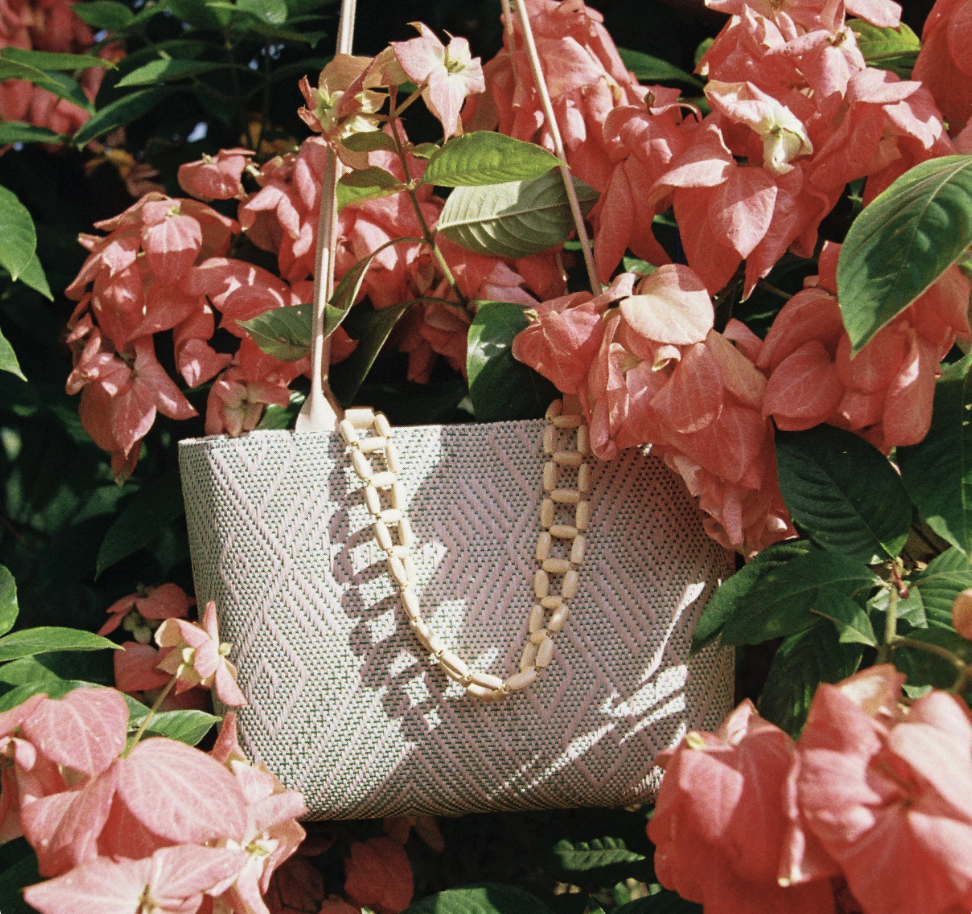
For over a decade, Halohalo turned Filipino craftsmanship into a coveted aesthetic, transforming the humble banig into a statement of luxury. More than just a brand, it curated a lifestyle — one that blended tradition with exclusivity, drawing in Manila’s fashion elites.
But as Halohalo bids farewell, its rise and fall spark deeper questions: When does cultural appreciation become commodification? And who truly benefits when heritage is rebranded as high fashion?
Founded in 2013, Halohalo is a local lifestyle brand created by siblings Cara and Rocco Sumabat. Known for their artistic, banig-inspired bags, Halohalo soon expanded to clothing and furniture in the later half of its conception.
Earlier this year, Principal designer and co-founder Cara announced that Halohalo would be closing its doors – online and offline (at their Powerplant store) by January 29. In an Instagram post shared on Cara’s personal Instagram, she said, “Time to bid farewell to places and things that no longer serve us; time to honor what lives within the heart.”
Halohalo bags: A mix of textiles
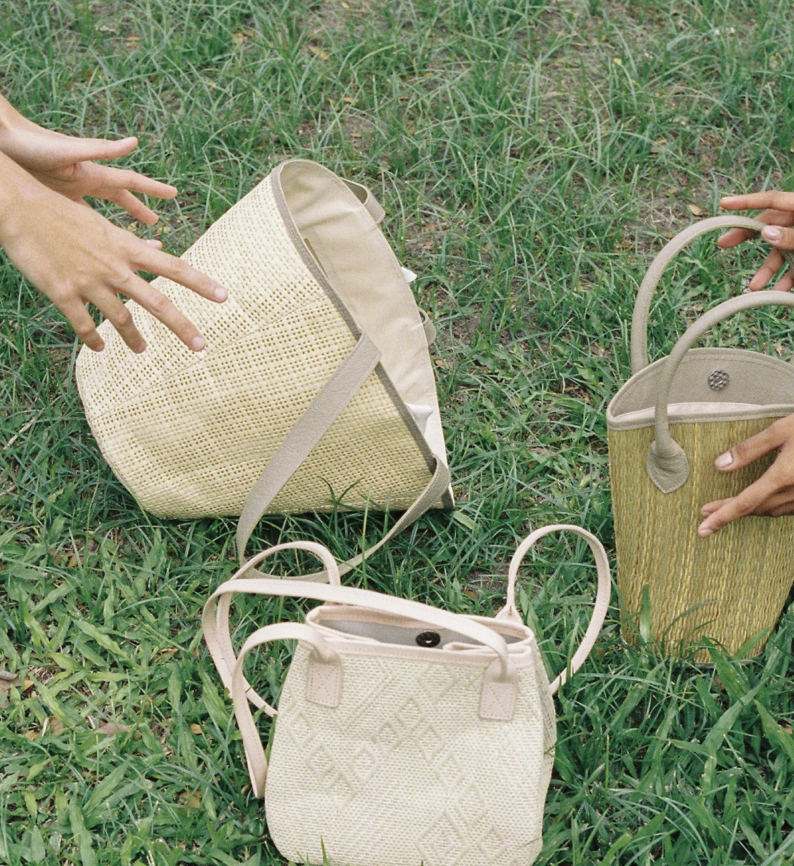
Based on their namesake, halohalo bags feature a mix of textiles – mainly machine woven material and leather, a pair that Cara says, “didn’t really make sense to begin with… just like the halo halo.”
Halohalo started as a small venture producing bags and home accessories made entirely in the Philippines by a tight-knit group of artisans. This fusion of traditional craftsmanship and modern design quickly garnered attention, earning the brand a dedicated following among the fashion-forward crowd.
The brand gained an immense audience after it launched full online operations due to the pandemic. Halohalo amassed such a huge cult following that new drops and collections were sold out within days.
Following this massive demand for halohalo bags, many individuals took to Carousell, a mobile and web-based marketplace for buying and selling new or secondhand items to get their piece of halohalo. However, consumers were met with steep resale prices, with some halohalo bags listed for as much as PHP10,000 — nearly double the brand’s average retail price of PHP5,738.
This trend highlights how exclusivity drives demand in fashion, where high resale prices and limited availability make products even more desirable to consumers.
The commodification of Filipino culture

TikToker Alyssa Uy captured this sentiment, saying, “These bags are notoriously very hard to obtain for no reason at all — literally no reason at all, like the material isn’t rare or anything, they just kind of supply and demand it, and you know what? I give into it every single time.”
Halohalo’s successful marketing and introduction to its “endless summer” aesthetic has been well-received by its consumers, allowing the brand to justify higher prices and sustain its low supply high demand model. Dubbed ‘the Birkin bag for the college girlies’ by TikToker Rocio Trillo, Halohalo bags have shifted from symbols of local craftsmanship to emblems of capitalism’s grip on cultural commodification.
Rocio shares that the brand’s curated inaccessibility is what makes it so attractive to her as a consumer. Alyssa, who agrees with this, also believes the bags aren’t worth the price: “Would I say that these are worth it? Well, no, not really. It’s literally made of plastic banig material. But they are cute for the vibes.”
Originating in Basey, Samar, the banig is a traditional handwoven mat often made of pandan or sedge leaves. Woven by local artisans, the banig holds an immense significance in Filipino culture and tradition – representing family, love, and home for many. Banig has long been a household staple, used as sleeping mats, picnic blankets, and floor coverings. As both an art and a form of livelihood, banig weaving is also a means for many to pay homage to their ancestors and pass on their legacy.
Despite its deep cultural roots, the banig’s image was transformed when brands like Halohalo repackaged it for an upper-class market. Once an item of necessity, it was now an emblem of chic, minimalist living– fit for the ‘titas of Manila’.
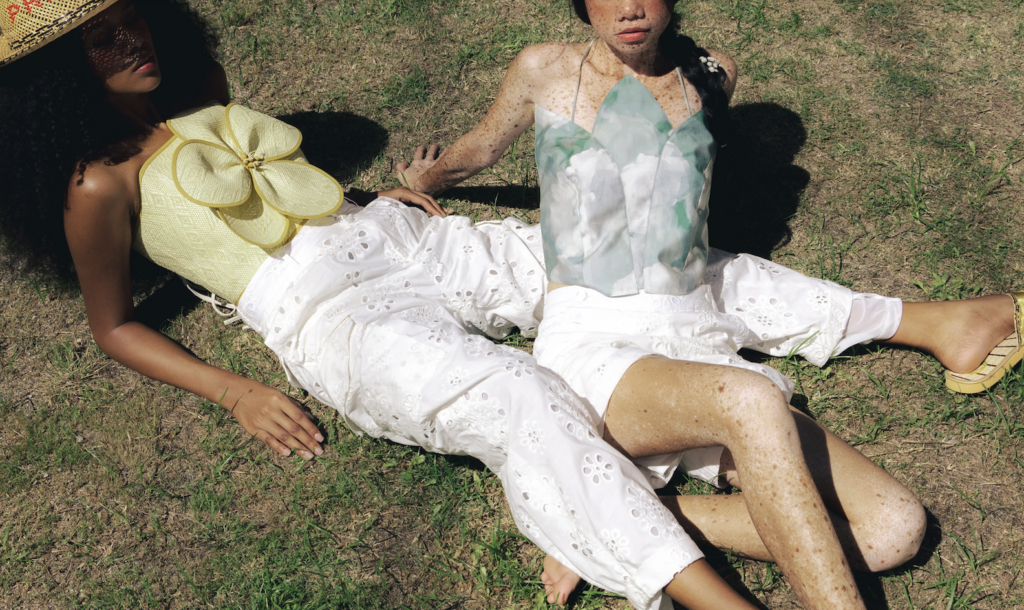
This shift is part of a larger phenomenon — the commodification of Filipino culture, where traditionally “low-class” items are rebranded as luxury through the lens of elite consumption.
Halohalo’s attempt to evoke the feeling of “an endless summer and holiday” to a mostly upper-class market turns a lived reality into a curated fantasy, selling an aesthetic that many cannot afford to escape. For the upper echelons of society, the ‘island living’ and holiday brought by the summer is luxurious – where handmade and native goods, along with tropical settings, are seen as a visual aesthetic to be enjoyed, consumed, and documented on social media.
Yet, for many underprivileged Filipinos, the ‘island life’ is shaped by inaccessibility to resources, infrastructure, and economic opportunities. This reality is polarizing and eye opening to the gaps between the privileged and underprivileged. When brands like Halohalo package elements of rural Filipino culture for high-end consumers, it raises questions about who truly benefits from these representations.
Halohalo’s legacy: Questions for future of Filipino craftsmanship
This trend echoes a much broader pattern of cultural appropriation, where aesthetics derived from working-class and indigenous communities are repurposed for an elite audience.
What was once a symbol of survival and practicality — such as the banig —becomes a designer statement, often without acknowledging the labor, history, and struggles behind it. Suddenly, banig becomes a glamorized and inaccessible commodity from where it originates.
Halohalo’s rise and fall mirror a broader trend in fashion where rustic, “poor” aesthetics are romanticized and repackaged for high-end consumers.
As Halohalo transitions into the next phase, its legacy leaves us with questions: How do we celebrate Filipino craftsmanship without commodifying it? How do we ensure that artisans are fairly compensated when their work becomes desirable among the elite? And most importantly, how do we preserve the integrity of traditions like banig weaving in a rapidly commercializing world?
Moving forward, brands that commercialize local goods and textiles must go beyond acknowledging their heritage — they must critically examine their broader impact on Filipino society. Campaigns and products send a message, shaping power dynamics between the privileged and the underprivileged. Brands have a social responsibility to ensure that the integration of heritage and industrialization does not reduce the Filipino experience to a curated fantasy that is only afforded by one sector of society.
Filipino culture is not an aesthetic to be romanticized– it is a culture deeply rooted in history, resilience, and the lived experiences of its people. To honor it means uplifting the communities behind these traditions, not just repackaging them for commercial appeal.
Halohalo may have said its goodbyes, but its story is far from over. As Filipino craftsmanship continues to evolve, its next chapter will be one worth watching.