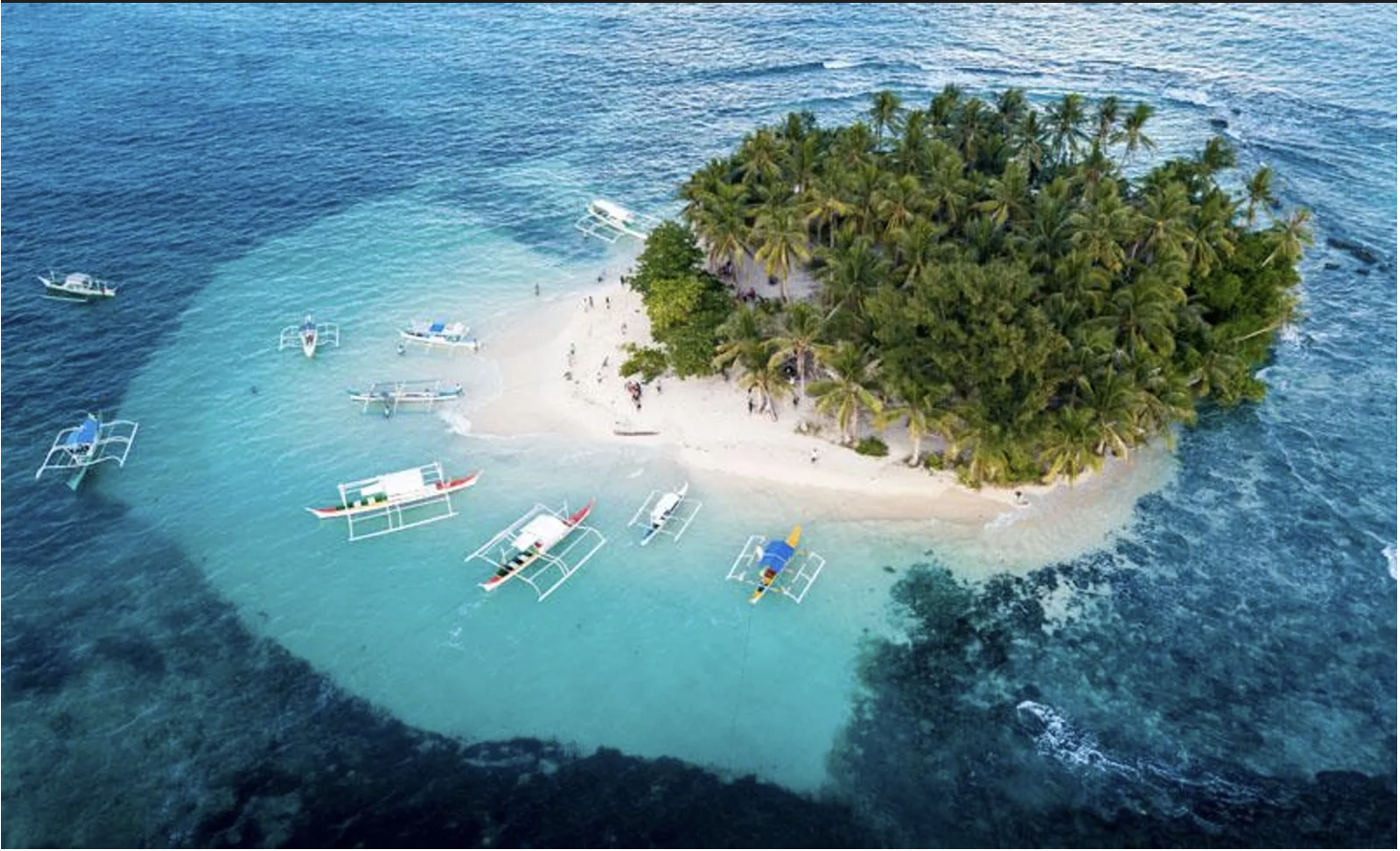
The Philippine archipelago, a tapestry of breathtaking islands, beckons with the promise of sun-drenched days, crystalline waters, and shores fringed by swaying palms. Among these gems, Siargao, the celebrated “Surf Capital of the Philippines,” holds an undeniable allure.
About a decade ago, in 2012, the island welcomed a modest 13,000 international visitors. Fast forward to 2023, and that figure has exploded to over 476,000, a number that continues its relentless climb. It’s easy to understand why: the legendary waves, the iconic palm-lined roads, and the island’s unique, magnetic energy perfectly embody the fantasy of a tropical escape.
Yet, unlike the famed biodiversity of destinations like Boracay, El Nido, and Coron, Siargao’s enduring appeal lies deeply within its local community and vibrant culture. Visitors return not just for the thrill of the surf or the postcard-perfect scenery, but for the genuine warmth of the Siargaonons, their unique way of life, and the profound sense of belonging that emanates from a place firmly rooted in its identity.

However, as global attention increasingly focuses on Siargao’s shores, the very essence of its charm – the way of life and culture nurtured by generations of locals – now faces a significant threat. The island magnetizes digital nomads, travel influencers, and international tourists seeking refuge from the relentless pace of urban existence. They arrive with dreams of their own “Eat, Pray, Love” moments, hoping to find clarity, healing, or reinvention beneath the shade of coconut trees and the rhythm of crashing waves.
But in this pursuit of personal paradise, a crucial cost is often overlooked: the subtle displacement of locals, the creeping commercialization of deeply held traditions, and the gradual erosion of the very soul that initially made Siargao so captivating.
Paradise lost? Locals pay the price of Siargao’s booming tourism
The island’s transformation into a global tourism hotspot has undeniably spurred economic growth and created new opportunities for some within the local community. However, the relentless construction of this idealized island fantasy comes at a steep price, one that is disproportionately borne by the Siargaonons themselves.
At the heart of Siargao’s escalating cost of living are the dizzying hikes in the prices of land, housing, food, and essential services. As affluent investors and developers descend upon the island, land that was once within reach for local families has become an unaffordable luxury.
Property values have surged by an alarming 40%, pushing the dream of homeownership far beyond the grasp of most Siargaonons. Fishermen and coconut farmers, who have sustained their livelihoods on the island’s natural bounty for generations, now grapple with the harsh reality of soaring costs, particularly for everyday goods and services increasingly geared towards the influx of foreign visitors.
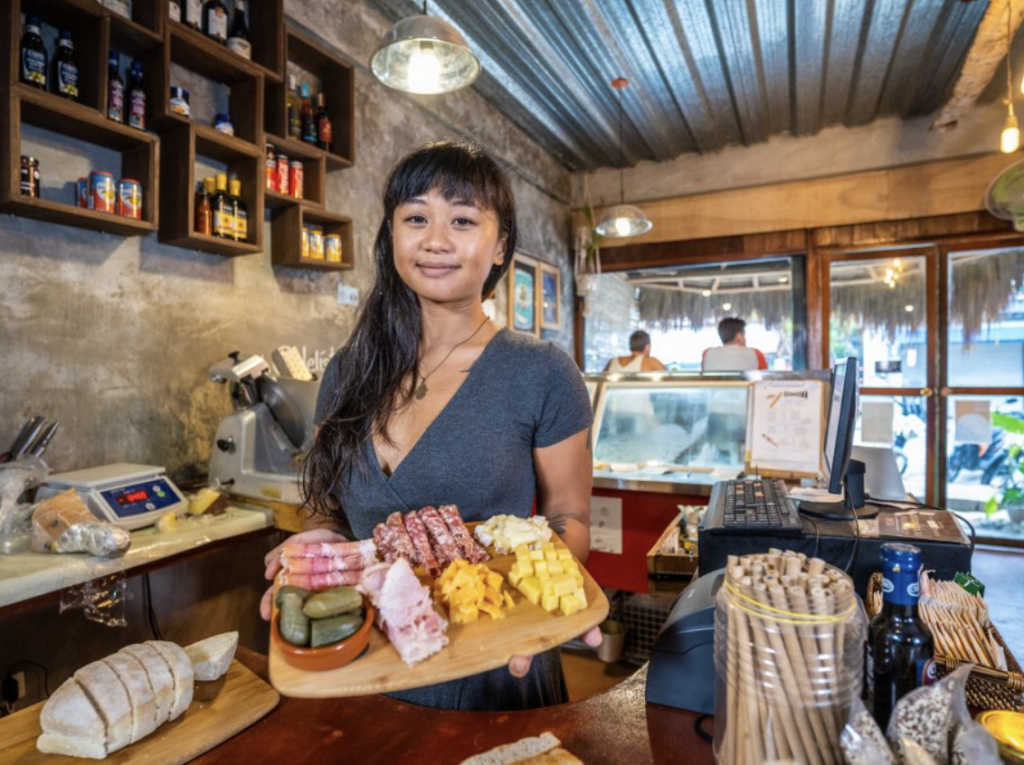
The very people who once drew their sustenance from the land now find themselves unable to afford to live in the neighborhoods they grew up in. Small, locally owned businesses struggle to compete with the burgeoning business giants, high-end resorts, and foreign-owned enterprises that are rapidly dominating the local economy.
Meanwhile, long-time residents, many of whom relied on traditional livelihoods like fishing, farming, and small-scale trade, are being gradually edged out of their own economic sphere. Land, often passed down through generations, is being sold, frequently out of necessity, to buyers with significantly deeper pockets. Tourists are presented with a carefully curated experience of “authentic” island life, while the actual “Siargaonons” are being pushed further from the very shores that define their heritage.
Beyond the dream: Facing the reality of economic disparity

This economic displacement reflects a fundamental question: who truly gets to enjoy paradise, and who is left to shoulder its mounting costs? The uncomfortable truth is that while international visitors realize their tropical aspirations on borrowed land, the locals are increasingly losing both their homes and their cultural inheritance.
Siargao now teeters on the precipice of gentrification, a process where once-affordable areas undergo transformation due to the influx of wealthier individuals, inevitably leading to the displacement of existing residents and a radical shift in their circumstances.
However, Siargao’s story doesn’t have to culminate in cultural erasure. History offers examples of other cherished destinations that faced similar threats and successfully fought back.
Bali implemented tourist caps and zoning regulations to safeguard its cultural integrity. Batanes enforced stringent land use policies to protect its unique heritage. Sagada has long resisted the allure of large-scale developers, championing community-based tourism instead. And Boracay is now gearing up for a more sustainable future.
These examples demonstrate that progress and development need not come at the expense of a place’s fundamental identity.
Grassroots resilience: Local initiatives fighting for Siargao’s soul
Fortunately, local organizations within Siargao are proactively working to protect the island from within. LokalLab, a dedicated grassroots NGO, focuses on bolstering Siargao’s sustainability and empowering the local community. Their impactful work supports regenerative farming practices, nurtures local artisans, and champions community-led education initiatives. They have even fostered economic ecosystems that directly connect local food producers with hospitality businesses, empowering those often marginalized by the dominant tourism model.
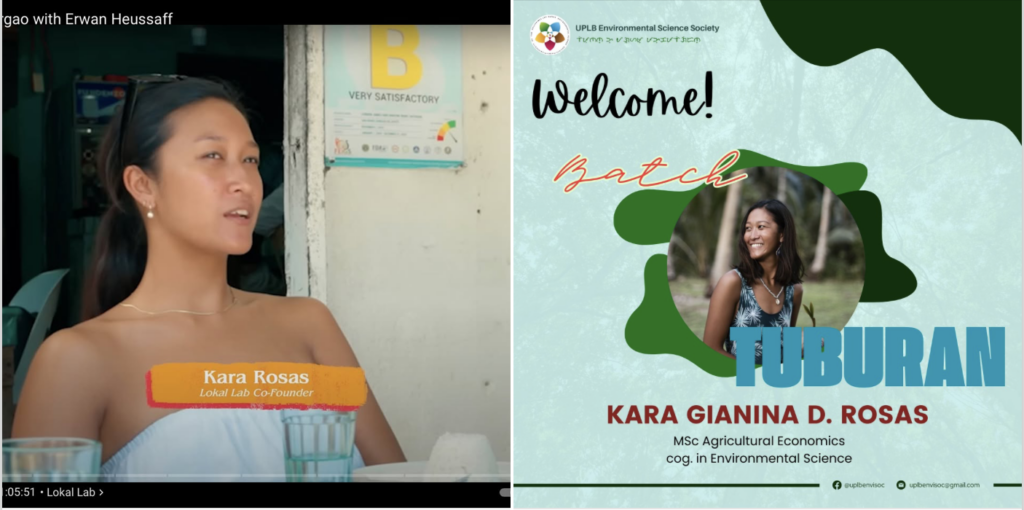
“They’re the food producers and the backbone of tourism – and we don’t want them to be ostracized from development,” emphasizes Kara Rosas, PR Director for LokalLab. “That’s what happened in Bali…When visiting or moving to the island, we need to be careful not to gentrify it and be mindful about the island’s existing culture.”
Similarly, initiatives like The Sun Crew and sustainable surf resorts such as Harana are challenging conventional norms by prioritizing local talent and collaborating with certification bodies like STOKE to ensure that tourism respects both the rich cultural heritage and the delicate environment. These inspiring efforts demonstrate that it is indeed possible to forge a model of tourism that genuinely benefits the local population, honors cherished traditions, and safeguards the natural environment, rather than simply commodifying it.
Weimar Bonono, a celebrated prosurfer and co-founder of Pacifico Surf Bayay, Bigwish surf school, Pacifico surf school, Swell snackbar, and the Sun Crew charity, offers a hopeful perspective: “We’ve seen what’s happened in other island destinations. As long as we prioritize sustainability, eco-friendly initiatives, and responsible tourism, Siargao can thrive without losing its charm.”
Yet, while the dedication and passion of grassroots movements are undeniably vital, their impact is inherently limited without broader structural change. The stark reality is that government intervention is crucial. Without decisive policy changes, Siargao’s future will be determined not by its people, but by the relentless pursuit of profit. Our islands, our land, our people, and our culture are not mere backdrops for a tropical escape.
Real individuals live and work on the very land that has been transformed into a foreign playground. While tourism undeniably fuels economic activity, if it comes at the cost of displacing and disempowering the very people who make Siargao unique, can it truly be considered progress?
Safeguarding homes, not just destinations: Path to sustainable future
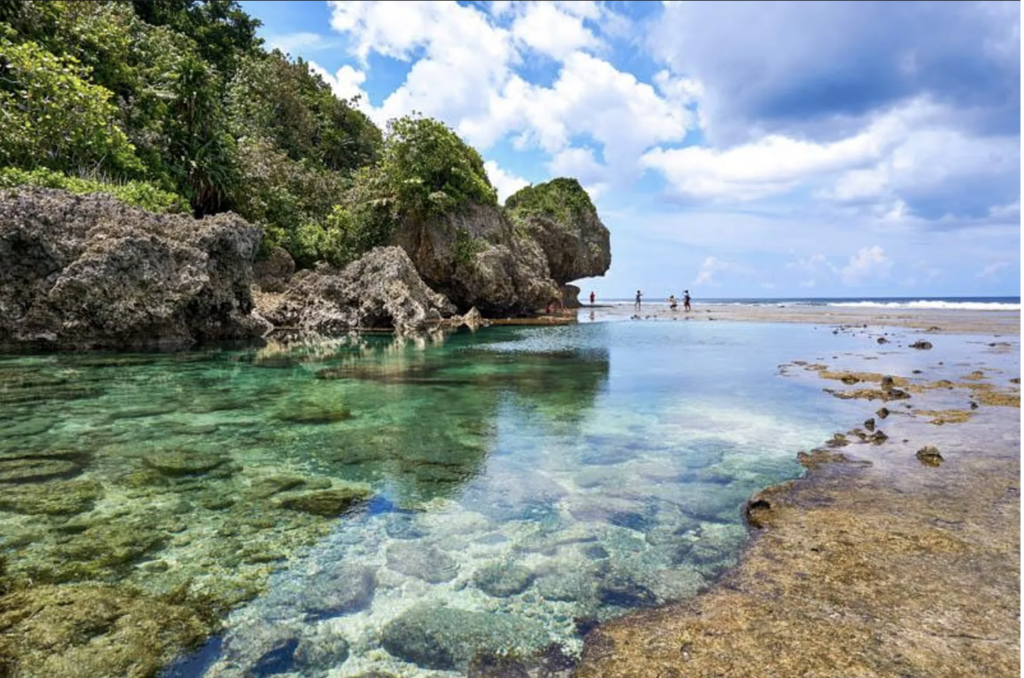
The urgent need is for land regulations that prioritize the rights and needs of locals, zoning laws that effectively cap unchecked development, and community-first planning initiatives that actively resist foreign overreach.
It is time to move beyond romanticized notions of “provincial peace” and confront the stark reality: unregulated tourism can be a slow, insidious form of colonization. It perpetuates a gentrifying cycle that gradually erodes the lives and livelihoods of locals to cater to the desires of the affluent. The very lands and islands that are lauded by international visitors cannot be fully celebrated if their original inhabitants are not empowered and prioritized.
More than just the physical landscape, it is the people who create the unique identities, vibrant cultures, and welcoming communities that draw tourists in the first place.
Local governments must enact policies that ensure the economic benefits of tourism are distributed equitably. Incentives should be strategically given to homegrown businesses, landowners must be protected from predatory purchasing practices, and environmental sustainability must be placed at the forefront of every development plan.
Tourists, too, bear a responsibility. Choosing locally owned accommodations, demonstrating genuine respect for cultural customs, and practicing mindful consumption can collectively make a significant difference. The pursuit of a soul-searching getaway should never come at the expense of another person’s livelihood and heritage.
These breathtaking islands that we affectionately call paradise are not simply destinations; they are homes. And if we truly cherish these islands, we must actively protect the people who rightfully call them home.