
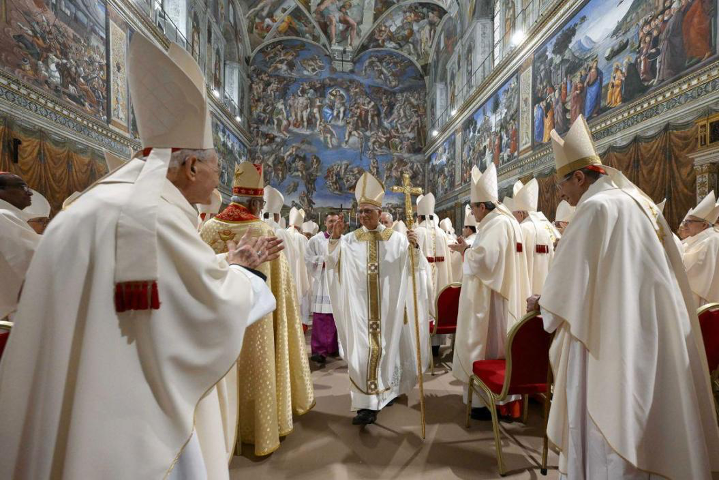
If you’ve been following the news these past few weeks, you’ve probably seen the name “Pope Leo XIV” everywhere, from international headlines to local parish bulletins.
For many, the papal conclave may have felt like a distant spectacle: white smoke, Latin chants, and centuries-old rituals. But this time, the story feels closer to home, especially for those who had their hopes pinned on Cardinal Luis Antonio Tagle replacing Pope Francis.
While Tagle didn’t clinch the papacy, the man who did, Pope Leo XIV, brings a narrative that’s just as compelling, quietly revolutionary, and is, frankly, full of surprises
From Chicago to the Andes: An American Pope
Pope Leo XIV, born Robert Francis Prevost, is not your typical Vatican insider.
Raised in the suburbs of Chicago, he is the first American-born pope. But his story stretches far beyond a Midwestern upbringing.
After his ordination, he packed his bags and headed to Peru, where he spent over two decades as a missionary and later as a bishop. There, he immersed himself in the life of indigenous communities, learning not just Spanish, but Quechua (the ancient language of the Andes).
This Peruvian chapter didn’t just shape his ministry; it transformed his worldview. He has seen not only the gilded halls of Rome but also the humble chapels of the Amazon, the bustling markets of Lima, and the quiet struggles of people living on the margins. His fluency in multiple languages is more than a parlor trick. It’s a bridge to communities often overlooked by the global Church.
The Augustinian spirit of unity

IMAGE CREDIT: Varillas Saavedra/Newscom
Pope Leo XIV’s roots in the Order of Saint Augustine are central to his leadership style. The Augustinians live by a guiding principle: “one heart and one mind on the way to God.”
For Pope Leo XIV, this is not just a motto. It’s a mission statement. His time in Peru was marked by efforts to unite people across differences, promoting communities grounded in diversity rather than uniformity.
This spirit carried into his inaugural Mass as pope. Instead of spotlighting doctrinal divides, he called for a Church that embraces the world’s many colors, voices, and dreams. It’s a message that resonates deeply at a time when many feel left behind.
From pizza delivery to the Papacy
Before donning the white cassock, Pope Leo XIV wore a pizza delivery uniform. As a college student in Chicago, he zipped around town delivering pizzas to make ends meet, a humble detail that is both charming and telling.
In a world where many leaders seem distant, Pope Leo XIV’s blue-collar beginnings make him instantly relatable. He knows what it’s like to work late, rely on tips, and see the city from the driver’s seat.
This humility continues to endear him to many. He’s not afraid to roll up his sleeves – literally. In Peru, he was often seen delivering aid during floods, sharing meals with locals, and engaging in community activities like tennis. For him, leadership isn’t about titles; it’s about service.
A Math whiz in the Vatican

IMAGE CREDIT: Vatican Media/AP
Adding another layer to his unique profile, Pope Leo XIV holds a degree in mathematics from Villanova University. While most popes have backgrounds in philosophy or theology, his analytical mind brings a fresh perspective to Vatican affairs. Colleagues describe him as a problem solver, someone who can cut through complexity to find practical solutions.
This knack for numbers isn’t just academic.
During his time as a bishop in Peru, he managed budgets for sprawling dioceses, ensuring that resources reached the most vulnerable. In meetings, he’s known for asking pointed questions and backing up his decisions with data – a rarity in the often tradition-bound corridors of the Vatican.
Champion of the marginalized
Perhaps the most defining trait of Pope Leo XIV is his unwavering commitment to the marginalized. Whether it’s indigenous communities in Peru, migrants in the U.S., or the poor in urban slums, he has consistently chosen to walk alongside those on the periphery.
His first major address as pope focused on a call for love and unity, the two dimensions of the mission entrusted to St. Peter by Jesus Christ. In his inaugural homily, he spoke about building bridges, not walls. His message to diplomats focused on the Church’s mission to promote peace, truth, and justice.
From his earliest words as pope, it’s clear: this will be a papacy grounded in inclusion, compassion, and dialogue.
What’s next for the church?

IMAGE CREDIT: Masiello/Getty Images
With Pope Leo XIV at the helm, the Catholic Church seems poised for a papacy that’s less about pomp and more about people. He is expected to advocate for climate action, social justice, and interfaith dialogue. But don’t expect him to make changes just for the sake of headlines. If his past is any indication, he’ll listen first, act thoughtfully, and always keep the needs of the most vulnerable at the center.
For those still nursing disappointment over Tagle’s missed chance, take heart: Pope Leo XIV’s story is proof that the Church still has room for surprises. In a world hungry for authenticity, his journey from pizza delivery boy to the Bishop of Rome is a reminder that greatness often comes from the most unexpected places.
And maybe, just maybe, that’s exactly what the world–and the Church–need right now.