
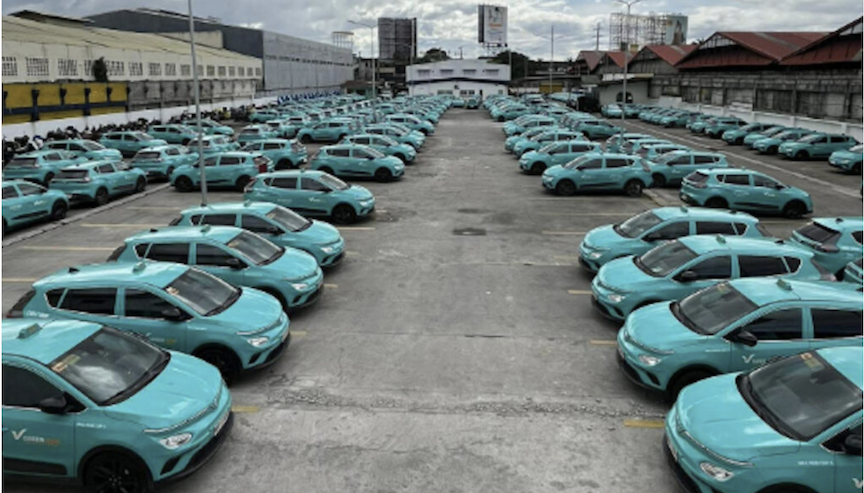
In Cebu, the conversation around electric vehicle (EV) taxis didn’t begin with charging stations, carbon footprints, or futuristic transport dreams. It began with a question that many locals instinctively ask when change arrives quickly: Who decided this — and how does it affect us here?
That question surfaced after Cebu Governor Gwendolyn Baricuatro publicly opposed the rollout of EV taxis approved by the Land Transportation Franchising and Regulatory Board (LTFRB). What followed was less a debate about technology and more a closer look at process, authority, and the realities of moving people through already-crowded streets.
At the center of the issue is a provisional authority (PA) granted by the LTFRB to Green & Smart Mobility (Green GSM), allowing the company to deploy EV taxi units in Cebu City and other parts of Central Visayas. While the approval signals momentum toward transport modernization, it has also unsettled local officials who say the decision raises unanswered questions on regulation and readiness.
With a public hearing set on December 23, the situation has become a telling moment — one that reveals how national policy meets local life, and what happens when those conversations feel out of sync.
What a provisional authority really means on the ground
A provisional authority is, by design, temporary. Issued by the LTFRB, it allows transport operators to begin limited operations while completing the requirements for a full franchise. It’s a regulatory tool often used for pilot programs or to address supply gaps.
On paper, it’s straightforward, but on the streets of Cebu, it’s more complicated.
The PA effectively allows a new fleet of vehicles to operate alongside existing taxis and public transport. For local officials, the concern isn’t just whether the EV taxis meet national standards — but how their presence fits into Cebu’s licensing systems, traffic patterns, and day-to-day transport realities.
Temporary approvals, after all, can have very real and lasting effects once wheels hit the road.
Why local officials are pushing back

Cebu Governor Pam Baricuatro
Governor Baricuatro’s opposition does not appear to reject EV technology itself. Cebu, like many growing cities, understands the promise of cleaner and quieter transport. Instead, the pushback reflects broader concerns about governance and fairness.
One issue is regulatory overlap. Local authorities are asking how nationally issued provisional licenses interact with local transport rules, especially in a city where taxi operators have long operated under established frameworks.
There is also the matter of market impact. Traditional taxi operators and drivers have invested time and money to comply with existing franchising requirements. Introducing new EV taxi units raises concerns about whether modernization is being rolled out evenly — or whether some players are being asked to adapt faster than others.
Then there’s traffic. Cebu City’s roads are already under pressure. Any additional vehicles, regardless of fuel type, have implications for congestion.
For local leaders, the question isn’t whether EVs are cleaner — but whether the city is ready for more cars.
Progress is not just about innovation

EV taxis come with clear advantages. They align with sustainability goals, reduce emissions, and reflect where urban transport is headed globally. Cebu is not isolated from these trends, nor should it be.
But as this situation shows, progress is as much about how change is introduced as it is about what is introduced.
Transport modernization works best when decisions are transparent, coordinated, and grounded in local context. Caution, in this case, does not necessarily signal resistance to change—it can also reflect a desire to ensure that change is inclusive, orderly, and sustainable.
Why December 23 matters
The public hearing scheduled for December 23 offers a chance to slow the conversation down—and open it up.
It gives local officials, regulators, operators, and other stakeholders a space to raise concerns, seek clarity, and potentially reshape how the provisional authority is implemented. Outcomes could range from reaffirming the approval to modifying its scope, or even delaying the rollout pending further review.
Whatever the result, the hearing underscores the importance of dialogue—especially when national decisions directly affect local roads, livelihoods, and daily routines.
Beyond EV taxis, a bigger question
The debate unfolding in Cebu isn’t only about electric taxis or a single transport operator. It reflects a broader challenge facing many Philippine cities: how to balance national direction with local governance, and how to welcome innovation without sidelining existing systems.
EV taxis may well be part of Cebu’s transport future. The real question is whether their arrival can be shaped in a way that feels thoughtful, consultative, and rooted in place.
As the hearing approaches, the conversation continues — not about stopping progress, but about making sure it moves forward in a way that works for Cebu and the people who move through it every day.