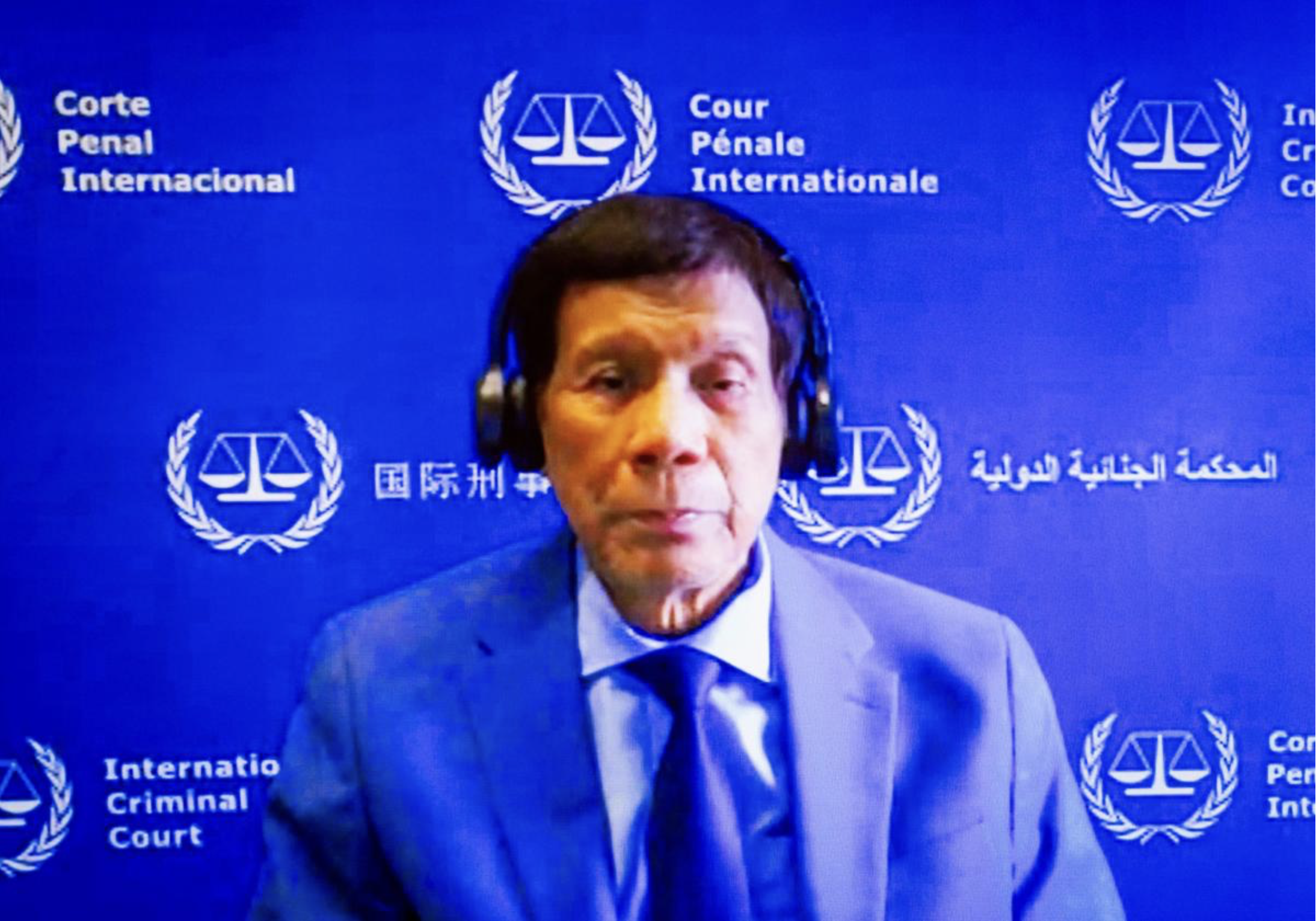
Upon landing at the Ninoy Aquino International Airport Terminal 3 (NAIA T3) from Hong Kong on Tuesday, March 11, 2025, former Philippine President Rodrigo R. Duterte (RRD) was arrested by a warrant issued by the International Criminal Court (ICC).
The former president was brought to Villamor Air Base before being put on a plane to be turned over to the ICC in The Hague, Netherlands.
As the first former Filipino head of state to be arrested by an international authority, RRD’s arrest signifies more than just the intervention of a foreign body in Philippine politics; it reflects Philippine politics itself.
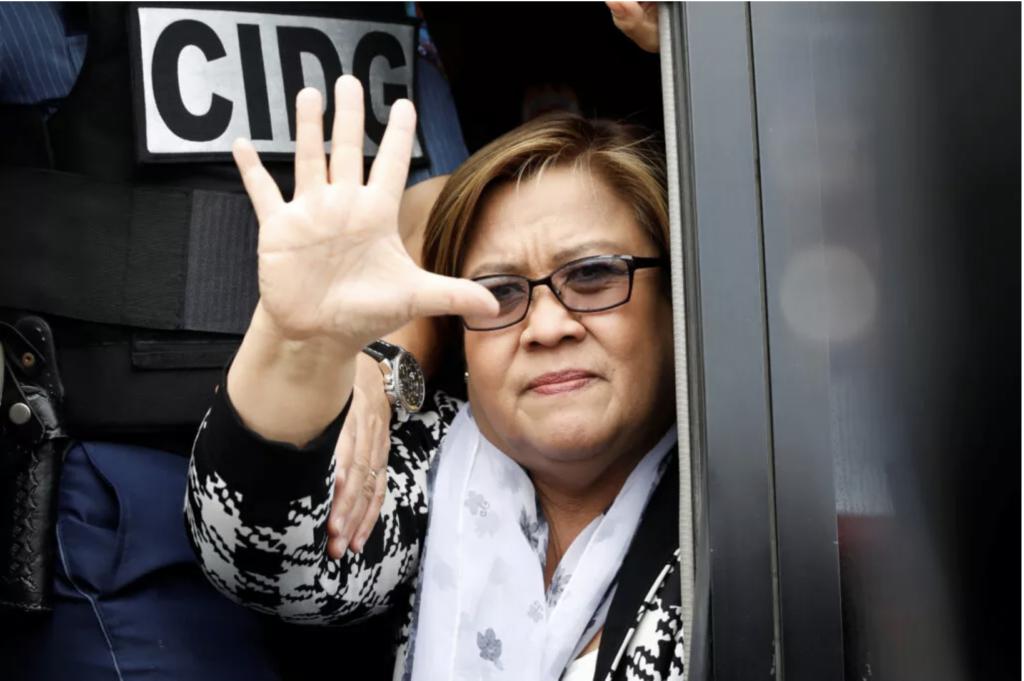
Former Senator Leila De Lima during her arrest by the CIDG
“Today, Duterte is being made to answer — not to me, but to the victims, to their families, to a world that refuses to forget. This is not about vengeance. This is about justice finally taking its course,” said former Philippine senator Leila de Lima, who was imprisoned for nearly seven years after condemning RRD’s heinous anti-drug war.
In May 2021, the ICC began its investigation of RRD’s siege on illicit drugs, first as the Mayor of Davao City and then as Philippine President. Spanning from 2011 to 2019, RRD’s approach to his anti-drug campaign was brutal and relentless, resulting in almost 30,000 deaths, with most victims coming from destitute backgrounds.
Duterte and his campaign promise in 2016
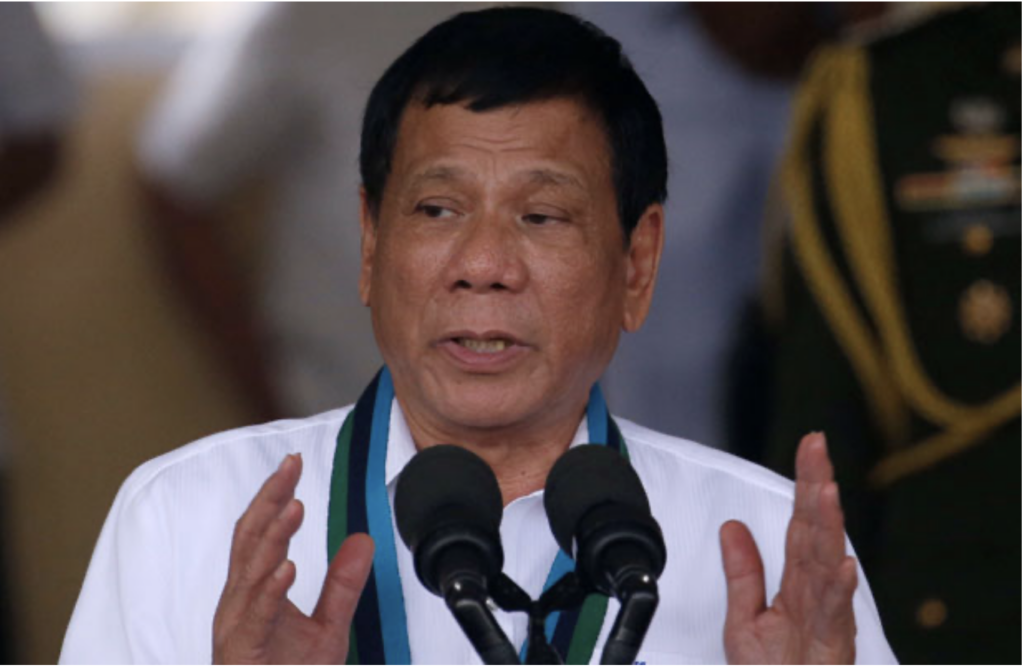
The former president’s promise to crack down on the country’s drug gangs became a prominent feature of his campaign in 2016. After assuming his role as president, RRD vowed to end the country’s illegal drug problems within six months, stating, “I don’t care about human rights, believe me.”
The aggressive crackdown on the country’s illegal drug trade took a grim turn when police officials were offered financial incentives for capturing or killing suspected drug lords and users. As a result, innocent lives were caught in the crossfire as officers pursued rewards over justice. The remains of many victims were found in polluted creeks, garbage dumps, and grasslands.
The ICC applied for RRD’s arrest warrant on February 10, 2025, for murder as a crime against humanity — one of the four crimes that grants the ICC the jurisdiction to intervene. RRD’s arrest has sparked discussions about its impact on Philippine sovereignty and whether it was politically motivated.
However, regarding Philippine sovereignty, the ICC follows the “complementarity principle,” which allows the ICC to intervene if the country is unwilling or unable to prosecute the crime. Though the Philippines is no longer a member of the ICC, RRD’s anti-drug war occurred while the country was still a member, thus justifying the ICC’s current involvement in the case.
Due to the ICC’s lack of a police force, it relies on cooperation with other countries to execute an arrest. The speculated politically motivated arrest stems from this principle.
An alliance made between Marcos and Duterte
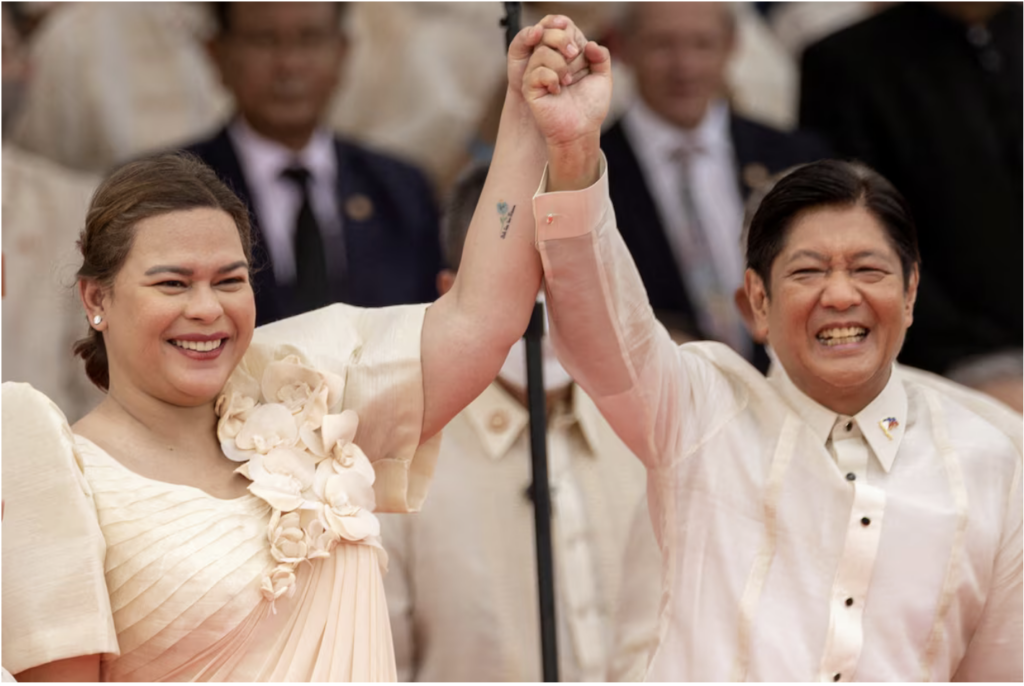
The cooperation of the Marcos administration in the arrest of RRD surprised many, as President Bongbong Marcos (BBM) had previously stated that his government would not cooperate with the ICC.
Before winning the election in 2022, the now-president Ferdinand Marcos Jr. allied with the Duterte family — making RRD’s daughter, now Vice President Sara Duterte, an ally of the Marcos clan.
The alliance sought to influence Duterte supporters to vote for BBM while ensuring that VP Duterte had the “Marcos machine” backing her for the 2028 presidential election. This alliance, while beneficial to both President BBM and VP Sara, was also favorable for RRD — protecting him from any fallout from his controversial presidency.
The breakdown of this strategic political alliance started with VP Sara’s request to gain jurisdiction over the Department of National Defense, which was denied, and instead given control over the Department of Education.
The disintegration of the Duterte-Marcos alliance was further exacerbated by President Marcos mending ties with the U.S. and VP Sara Duterte’s announcement of a planned assassination against him —which led to her impeachment earlier this year. The Marcos administration’s sudden change in position with the ICC could reflect the fallout between the two political clans.
RRD’s arrest: A milestone for justice or a reflection of political power struggles?
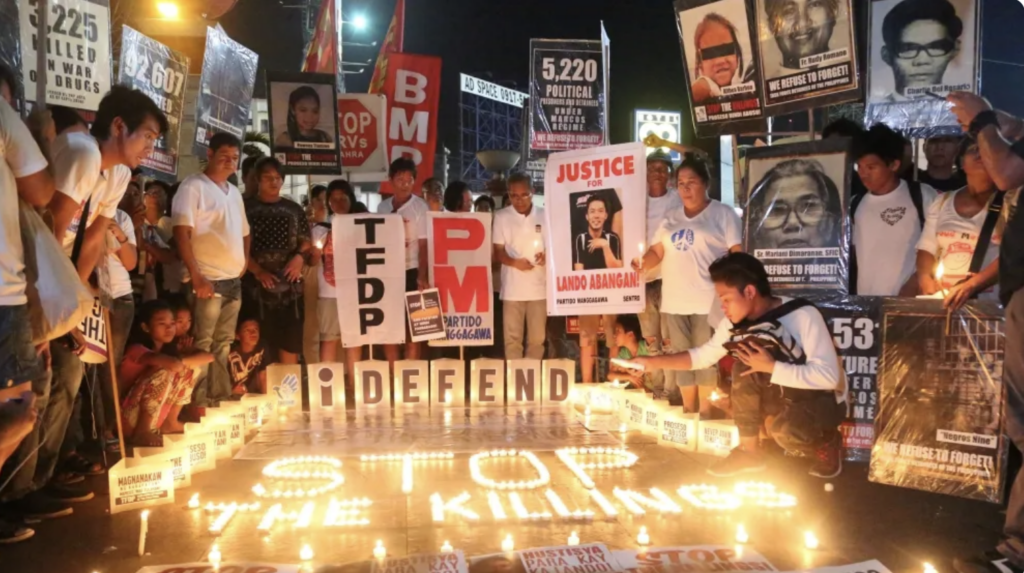
Randy Delos Santos, the uncle of an anti-drug operations victim, once told the Associated Press that RRD’s arrest was “…a big, long-awaited day for justice.” While many, like Delos Santos and Leila de Lima, mark RRD’s arrest as the beginning of justice served, many fierce Duterte supporters in the Philippines and around the world are demanding his release.
This case, while a testament to the growing power of international law, reveals a systematic indictment that has plagued the Philippines’ political landscape for decades: the use of politics in manipulating human lives and narratives to construct, conquer, and wield power.
The intention behind this pivotal moment in international law and Philippine politics is not entirely in the service of Filipino human rights and justice, but rather a subsequent effect of a political allegiance gone wrong. This raises concerns about the conditional parameters surrounding the protection of Filipino human rights — specifically, how a government institution in this case is not intentionally serving justice for the better, but as a demonstration of power.
RRD’s arrest represents much more than the power of the ICC in handling future cases. It signifies the capacity that government bodies possess to push politically motivated agendas if transparent policies and frameworks are not set in place. The former president’s arrest is a reflection of the powers that restrict authentic Philippine democracy and continue to prioritize power over people.
Unless justice is served with the intent to empower and uphold Filipino rights, any form of justice built upon the pawning of Filipino lives to feed power in politics is not justice served.