In the age of social media and globalization, culture and capitalism are often intertwined. Identity becomes a marketing tactic, and heritage is frequently repackaged for profit. As cultural narratives are reduced to aesthetics, we find ourselves in an era of cultural tokenism, where representation is often surface-level and rarely rooted in genuine engagement or understanding.
TikTok has become a powerful soundboard for calling out cultural tokenism and appropriation. From the commodification of South Asian jewelry and clothing to the Westernization of Taiwanese milk tea, Filipino users were quick to criticize Bahay Kubo – an accessory brand founded by British-Filipina influencer Christina Nadin – for using Filipino culture as branding without genuine cultural engagement.
As more brands jump on the “Pinoy-inspired” bandwagon, who gets to profit off our culture? Who actually gives back to it?
Despite its Filipino name, Bahay Kubo neither sources its products from the Philippines nor meaningfully engages with the culture or communities it claims to represent. The brand sells silk scrunchies and cotton headbands starting at P2,000 – a price point that sparked criticism among Filipino TikTok users. While it promotes a partnership with Siargao-based NGO Lokal Lab, the brand donates only $1 per order, raising further questions about its commitment to giving back.
Comments on a TikTok by @thecloud.st broke down Bahay Kubo’s use of performative branding for Western audiences, saying, “Just another pretentious Fil-am product capitalizing on Filipino heritage without actually contributing anything to the culture.” Other users defended Bahay Kubo, saying, “We’re not the target audience for these products.”

Beyond branding: Why local support fosters true Filipino culture
TikTok user @beafindsss weighed in on the Bahay Kubo backlash, saying, “The price is not the problem…the problem is [that] they’re capitalizing on Filipino culture.” She added, “Your brand is called Bahay Kubo – nothing about that screams high price point.”
The discourse and backflash regarding Nadin’s Bahay Kubo taps into a larger issue: cultural tokenism for commercial gain, and how often, brands with the loudest Filipino branding are the least connected, representative, or attainable to Filipino communities. Rather than getting caught up in branding alone, it’s worth turning our attention to homegrown labels that truly reflect Filipino artistry, values, and community.
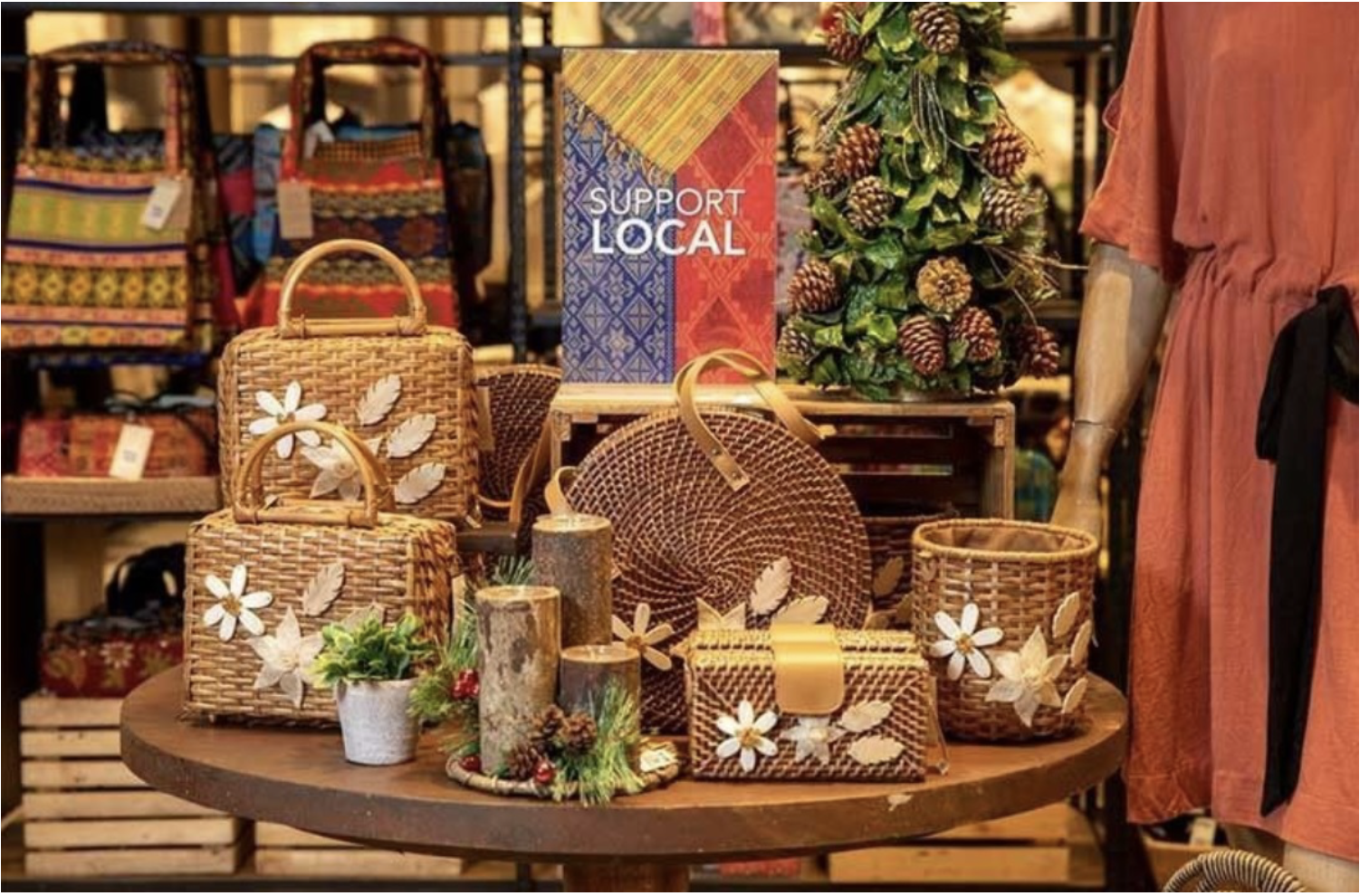
Buying local matters – it ensures authenticity, craftsmanship, accessibility, and transparency within our retail and business sectors.
Shopping locally is important for a variety of reasons. Here are five reasons to shop local brands.
- Stimulates the local economy — by supporting local and small businesses, you help keep money within the community, boosting local economic activity and growth.
- Reduces carbon footprint — shopping from overseas brands requires goods to be transported via air or sea. By shopping locally, less transportation is needed. Therefore, less pollution and congestion are produced.
- Nurtures local cultures and traditions — authentic Filipino representation thrives when we support local businesses—empowering them to grow, innovate, and showcase diverse products that strengthen our heritage and champion cultural identity.
- Creates more jobs — small businesses are the backbone of our economy. Supporting local also means supporting the local job market to expand.
- Supports innovation and growth — supporting and investing in local brands drives innovation, encouraging local businesses to create better and think outside the box.
Shopping at local and small businesses keeps Filipino innovation, heritage, and artistry alive. More importantly, it gives Filipinos a stage to demonstrate our culture as a lived experience rather than an aesthetic. Local brands are constantly popping into the market – many with cult followings, and others that are undiscovered gems.
Beyond branding: Three authentic Filipino labels to support
There’s no shortage of Filipino brands that walk the talk – combining creativity, culture,and community impact.
Here are three local brands worth checking out.

1. GVN The Label — originally selling shoes, GVN took the local market by storm with the introduction of their hobo bags. Now, with the product mix of shoes and bags, their cult following of over 70k on Instagram has guaranteed GVN as the newest “it girl” brand.
2. Munimuni — known for their locally crafted sandals, the brand has entered the clothing market, specializing in ethical, slow fashion. Immersed in nature and local fabrics, Munimuni Studio’s catalogue is one-of-a-kind and a testament to Filipino artistry.
3. Mina Asul — an undiscovered gem, Mina Asul is a jewelry brand that specializes in handmade, artisanal brass jewelry. Founded by Kaet as an ode to her grandmother, the brand is, in her own words, “a celebration of love, connection, and the enduring power of memory.”

Many of these local brands come together at pop-ups all over the metro, hosted by organizations such as Lots of Local Market, South Trading Post, The Solana Market, and many more.
So, if there’s anything to take away from this guide, it’s to remember that buying local is more than economics.
At its core, shopping local is a form of supporting Filipino innovation and cultural preservation. It’s saying no to tokenism and yes to businesses that build and represent heritage. True Filipino brands don’t need to choose a Filipino name – this is already reflected in the way they operate, with true Filipino hospitality and pride.
In an age of globalization, it’s imperative to not only shop Filipino but also empower the Filipino. Local brands are not just selling products; they’re telling stories, creating jobs, reviving traditions, and shaping a future where Filipino heritage, innovation, and culture are seen, valued, and respected without any ties to Western consumerism.
When we choose to support brands that are rooted in our people, stories, and culture, we don’t just shop local – we redefine it.