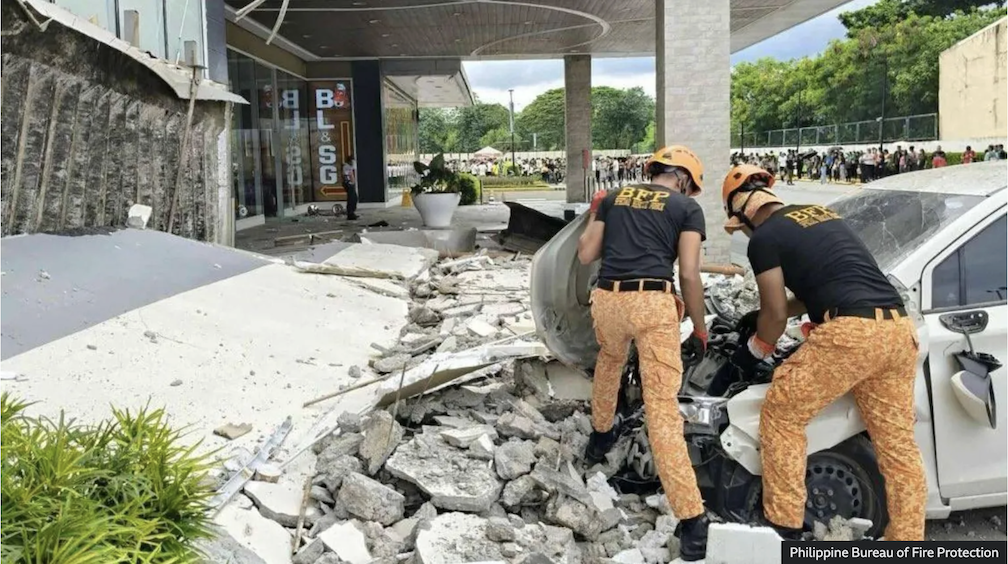
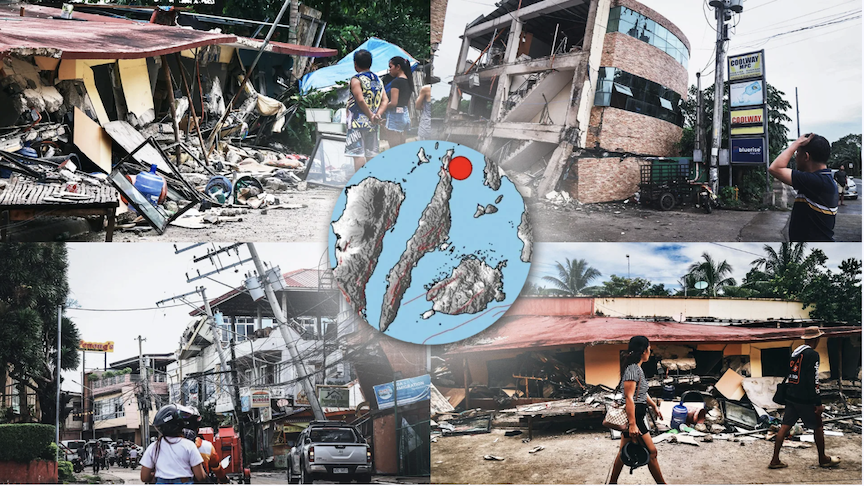
When two powerful offshore earthquakes rocked Davao Region earlier this month, the ground shook violently for nearly half a minute — and life changed in an instant for thousands of residents.
The twin quakes, measured at magnitude 7.4 and 6.8, struck just hours apart off the coast of Manay, Davao Oriental, killing at least seven people and damaging homes, bridges, and buildings across several towns.
“It was very slow at first, then it got stronger. That’s the longest time of my life,” recalled Christine Sierte, a teacher who was in the middle of an online class when the first quake hit. In nearby Davao City, Leonita Sumarago, a barangay health worker, watched her house crack and tilt. “We worry about where to live, where we can rest and sleep,” she said, reflecting on the uncertainty that followed.
Videos shared online showed vehicles swaying, metal gates rattling, as well as students and faculty scrambling out of classrooms as debris rained from buildings.
CREDIT: Jaymar Seso/Facebook
In Manay, disaster official Richie Diuyen described the shaking as the strongest he had ever felt — “we couldn’t stand earlier,” he said.
President Ferdinand Marcos Jr. later assured residents that emergency teams were working “round the clock” to reach those affected, as aftershocks continued to rock the region and authorities warned coastal communities to stay away from the shore due to possible tsunamis.
For many survivors, though, the real struggle began after the shaking stopped — when structures gave way and people found themselves trapped beneath collapsed walls and rubble. One of them was 35-year-old shopkeeper Marissa Ramos, who survived nearly 18 hours buried under concrete and twisted metal before rescuers found her alive. Her story — calm amid chaos, focus amid fear — is a powerful reminder that knowing what to do when disaster strikes can mean the difference between life and death.
When the ground starts shaking, even the most familiar places can turn into danger zones in seconds. But if you ever find yourself trapped under debris, there are ways to stay alive until help arrives.
Here are nine life-saving tips — along with expert advice and insights inspired by survival scenes from hit K-dramas like Concrete Utopia, Ashfall, and Tunnel — to help you endure and increase your chances of rescue.
1. Stay calm and control your breathing
Panic wastes energy and oxygen — both of which are critical if you’re trapped. Take slow, steady breaths. Focus on calming your mind. The more you panic, the faster you’ll tire and use up the air around you.

Pro tip: In the K-drama film Tunnel, Lee Jung-soo, the lead character trapped in a collapsed highway tunnel, survives by talking to himself, counting, and breathing deliberately to fight panic. Staying mentally active — even reciting a prayer or song — can help you manage fear and conserve oxygen.
2. Protect your airway from dust
Collapsed structures release clouds of dust that can make it hard to breathe. If possible, cover your nose and mouth with a piece of clothing, cloth, or anything you can find. Breathing through fabric can filter out dust and debris, preventing suffocation.

Pro Tip: Tear a strip from your shirt or use a face mask if you have one. In Concrete Utopia, characters trapped in debris cause by an earthquake used pieces of cloth and jackets to cover their faces while escaping from smoke and dust — simple improvisations that can save your life.
3. Conserve your energy
Avoid shouting or banging continuously — rescuers may take time to reach you, and yelling drains oxygen quickly. Instead, make short, periodic noises (like tapping on metal or pipes) to signal rescuers when you hear movement nearby.
Pro Tip: Use the “three-tap” signal — three short bangs or knocks, pause, then repeat. It’s an internationally recognized distress rhythm. Save your voice for when you actually hear rescuers nearby.
4. Don’t move around too much
If you’re pinned or surrounded by debris after an earthquake, don’t try to push your way out. Movement can cause rubble to shift and collapse further. Instead, assess your space. Make small, careful adjustments only if you can do so without risking more falling debris.

Pro Tip: Like the characters in Ashfall, who used limited movement to avoid triggering further collapse inside tunnels, stay still until you’re certain the structure around you is stable. Patience can be a lifesaver.
5. Create breathing space around your face
If debris is loose, try to clear small gaps near your mouth and nose using your hands, a piece of clothing, or even a stick. A fist-sized pocket of air can be enough to keep you alive longer while waiting for rescue during an earthquake.

Pro tip: Protect your face first before trying to clear larger debris. In many rescue cases — including real-life earthquakes in Japan and Turkey — survivors credited small air pockets for keeping them alive for hours or even days.
6. Make noise strategically
If you hear rescuers nearby, use short bursts of sound — three taps or shouts at a time are often recognized as a distress signal. If you can reach something metallic, tap on it to create a distinct, echoing sound.

Pro tip: Sound travels better through solid materials than air. Tap on pipes, walls, or metal beams instead of shouting into open spaces. In Tunnel, the trapped motorist used his car horn and debris to signal rescuers — proof that ingenuity can buy precious time.
7. Stay hydrated (as much as possible)
If you have access to water, sip it sparingly. Don’t drink dirty or contaminated water unless you have no choice — it’s better to stay thirsty for a while than risk getting sick or vomiting, which depletes your energy further.

Pro Tip: In Concrete Utopia, survivors rationed limited water and used condensation from walls and containers to stay hydrated. If you have fruit, canned drinks, or even ice, use those instead of unknown liquid sources.
8. Watch for earthquake aftershocks
If you’re not completely trapped and can move to a safer spot, be alert for aftershocks. These smaller quakes can cause additional collapses. Keep your head protected using your arms, a backpack, or any sturdy object.

Pro tip: Aftershocks are unpredictable — they can strike minutes or hours later. Move only when it’s safe, and never run. In Ashfall, survivors waited for shaking to subside completely before evacuating to open ground — a move that saved them from falling debris.
9. Keep hope alive
Rescue operations can take hours — sometimes days — but many earthquake survivors have been found alive even after long periods under rubble. Stay focused on breathing, conserving energy, and signaling when you can. Every minute you hold on increases your chance of survival.

Pro tip: In Tunnel, the hero’s motivation to reunite with his family kept him alive despite extreme exhaustion. Focus on a goal — loved ones, faith, or even your next breath. Hope isn’t just emotional fuel; it’s psychological survival.
Final thoughts
Surviving an earthquake isn’t just about luck — it’s about presence of mind, preparation, and patience. Staying calm keeps you thinking clearly, and thinking clearly keeps you alive.
If you live in an earthquake-prone area, take time today to learn escape routes, prepare a go-bag, and talk to your family about safety plans. Because when the shaking starts, knowledge and readiness are your strongest defenses.